Let's start with what's actually happening
Honestly? Your arousal didn't disappear. It just changed lanes.
Over time, the neurochemistry of desire shifts. Your body takes longer to cross the threshold into full arousal. That 10-minute warm-up that used to work now takes 20 or 30 minutes. Sometimes longer. And instead of a sudden spike, you might notice arousal building more gradually, like a dimmer dial turning up instead of a light switch flipping on. This isn't dysfunction. It's a completely normal physiological change that happens to most people as they age.
The frustration kicks in when you expect the old timeline and then wonder what's wrong. Nothing is wrong. Your body is just asking you to be patient with a different rhythm.
Why arousal speed actually changes with age
Several things shift together. Hormone levels drop gradually (both estrogen and testosterone, if you have ovaries). Blood flow to the genitals takes longer to increase. The nervous system's sensitivity to stimulation changes. And your skin gets thinner, which means some types of touch that used to feel amazing now feel either too intense or not quite intense enough.
But here's the interesting part: none of this means you've lost the capacity for pleasure. The clitoris doesn't age the way other tissue does. It's still densely innervated. It still responds to stimulation. You're not broken. You're just working with a different signal-to-noise ratio.
Mental factors matter too. Stress, life transitions, partner dynamics, and accumulated sexual history all influence how quickly desire ignites. A slower build isn't always biological. Sometimes it's your nervous system asking you to slow down and actually feel what's happening, which is its own kind of gift.
The problem with waiting for arousal to "just happen"
Here's what I see with clients: they expect their body to work the way it used to, they try the same routine, and when nothing happens after 10 minutes, they either give up or push harder. Both roads lead nowhere.
Waiting passively for arousal to build on its own timeline while you're trying to stay mentally present is exhausting. Your brain gets bored. You start thinking about the grocery list. Tension builds because you're frustrated with yourself, and tension kills arousal faster than anything.
Pushing harder (more friction, more intensity, tougher touch) often backfires. Thinner tissue over time needs gentler initial contact, not aggressive stimulation. So you end up chasing the same intensity level with less effective tools.
Neither approach honors what your body actually needs right now.
Why lemon clitoral vibrators change the game
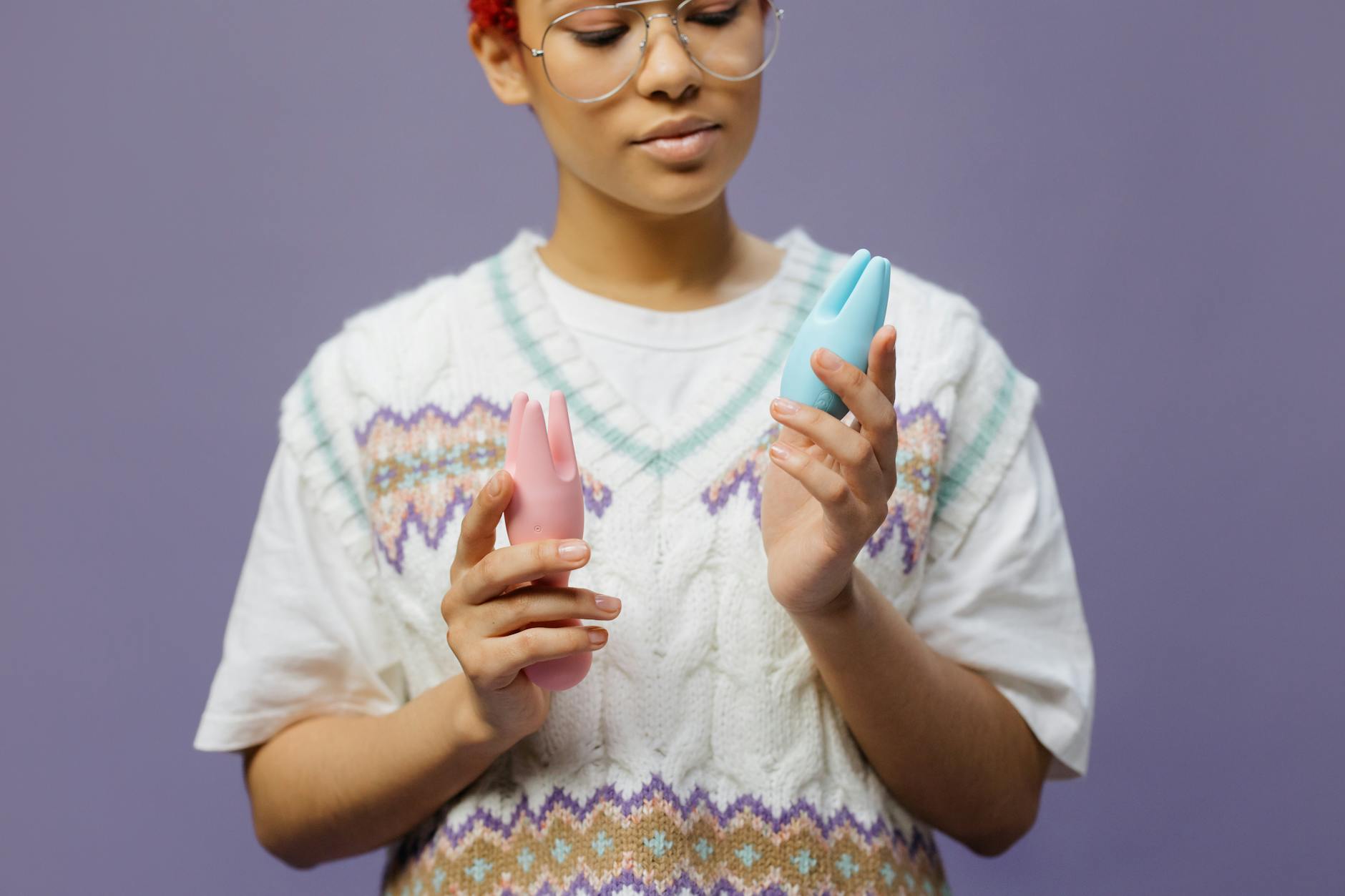
Lemon vibrators like the Lem work because they skip the "waiting for arousal to arrive" phase entirely. Instead of passive build, you're getting consistent, controllable stimulation that your nervous system can work with immediately.
The suction-based design matters here specifically. Suction reaches nerve endings that direct friction sometimes misses, especially if your tissue sensitivity has shifted with age. You can start on a lower pattern (the Lem has nine) and let your body wake up gradually without the mental frustration of "is this working yet?"
That lower intensity to start is key. Many people assume they should jump straight to a higher pattern to "make something happen." Actually, starting gentle and letting sensation build over a few minutes often works better than going hard from the beginning. The tissue needs time to swell and become more responsive. Suction creates that responsiveness without aggressive friction.
How to actually use a lemon vibrator when arousal is slow
First, separate warming up your body from warming up the toy. Most people focus on one or the other.
Start with non-genital touch for 5 to 10 minutes. This isn't foreplay theater. It's literally telling your nervous system "we're going to have touch now." Hands on your own neck, chest, belly, thighs. Partner touch if you have one. Slow. You're not trying to jump to arousal. You're preparing the system to respond.
Then introduce the Lem on pattern 1 or 2. Not because patterns 1 and 2 are weak. Because lower frequency stimulation activates arousal in a different way than high frequency does. You're teaching your body to build gradually instead of spiking. Over 3 to 5 minutes, your clitoris engorges. Blood flow increases. Sensation becomes sharper. This is when you can move up a pattern if you want to.
The whole point is removing the pressure to "perform" arousal on a timeline that no longer fits. You're giving your body permission to respond when it's ready, which is less frustrating and often faster than white-knuckling through the old routine.
The role of patience (and why it's not sacrifice)
I work with a lot of people who frame slower arousal as a loss. "My body used to cooperate, now it doesn't." That story makes the experience harder, not easier.
Reframe it this way: your body isn't refusing to cooperate. It's asking you to pay more attention. And when you pay attention, arousal deepens in ways that quick spikes never did. The sensation has more texture. The experience has more presence.
Using lemon clitoral vibrators with this frame changes everything. You're not fighting your body's timeline. You're working with it. You're choosing a tool that meets your body where it actually is, not where you wish it would be.
That shift from resistance to collaboration is where the pleasure actually lives.
When you're with a partner
If you share this change with a partner, it matters how you frame it. "My body takes longer now" can land as rejection if the conversation stops there. "My arousal builds differently, and here's what feels amazing" opens a new door.
Show them the lemon vibrator. Explain that you're using it to skip frustration, not to replace them. And actually, when you're no longer waiting for your body to cooperate, you can be more present with your partner. You're not anxious. You're not overthinking. You're just... there.
Many couples find that introducing a lemon vibrator into partnered sex actually creates more connection, not less, because both people are focused on what feels good instead of either person waiting for something to happen.
If you've been with the same partner for years, slower arousal can also be an invitation to rediscover each other. Different tools, different touches, different timing. It's actually an opportunity, if you're willing to see it that way.
Addressing the guilt and the grief
Some people feel genuinely sad about changes to their sexual response. That's legitimate. You're mourning a version of your body that worked differently. Let yourself feel that without turning it into shame.
At the same time, you're probably experiencing pleasure in ways you couldn't before. You have more sexual skill. More knowledge of what actually feels good. Better boundaries. Less performance pressure. You understand desire in a deeper way.
Using lemon vibrators isn't about chasing youth. It's about honoring the body you have now and giving it tools that actually work with your current physiology.
The bottom line
Arousal didn't leave. It shifted. Slower doesn't mean broken. It means different. And when you work with lemon clitoral vibrators that account for that difference, you're not fighting your body anymore. You're collaborating with it. And that's where the best sex actually happens.
For more on navigating pleasure as your body changes, check out how lemon clitoral vibrators help when sensitivity fluctuates with your cycle and how to reintroduce lemon vibrators after losing sexual confidence in midlife. Both touch on shifting sensation in different ways.
People also ask
How long does it take for arousal to build with age?
It varies widely, but most people notice arousal taking 15 to 30 minutes to reach the level that used to happen in 5 to 10 minutes. Some people find 45 minutes is their new normal. There's no universal timeline. What matters is knowing your own body's rhythm now, not expecting it to match what it used to do.
Can lemon vibrators speed up arousal?
Not in the way you might hope (instant arousal isn't really possible biologically). But they can compress the "waiting" phase because they provide direct, consistent stimulation while your body's own arousal response is building. You're not sitting around wondering if anything's happening. The sensation is immediate, which keeps your brain engaged instead of wandering.
Does slower arousal mean less pleasure at the end?
Actually, no. Many people report deeper, more satisfying orgasms when they've given their body time to fully build. The pleasure isn't shorter. It's different. It often has more texture and more presence because you're not chasing a timeline. You're just experiencing what's there.
Is it normal for arousal to slow down at any age?
Yes. Changes in arousal speed happen across your lifespan, not just at midlife. Stress, medications, relationship shifts, sleep, health changes, and hormonal fluctuations all affect arousal speed at any age. If it's a new change that's bothering you, it's worth checking in with your doctor, but in most cases, it's just your body adjusting to something.
Should I use a lemon vibrator alone or with a partner?
Both. Alone, you learn your own body's rhythm without any performance pressure. With a partner, it can deepen connection because you're both focused on what actually feels good instead of either of you waiting for something to happen. There's no rule. Do whatever feels right for your situation.
How do I know if slow arousal is normal or something medical?
If your arousal was fast and suddenly became very slow over a short period, or if it's painful, that's worth a conversation with a doctor. If it's been gradually shifting over years, that's normal aging. If it's connected to medication, that's also medical (and sometimes fixable). But if it's just "this is how my body works now," that's not abnormal. It's just different.
Sources
Information in this article draws on clinical research in sexual response across the lifespan, including work on aging and physiological arousal patterns published in journals including the Journal of Sexual Medicine and Archives of Sexual Behavior. The advice about lemon vibrator technique and partnered communication reflects established practices in sex-positive therapy and relationship coaching.