Here's the thing about timing orgasms
You probably think there's a clock involved. Two minutes, five minutes, ten. But asking "how long does it take to orgasm with a lemon vibrator" is like asking "how long is a song." A folk ballad isn't shorter or worse than a three-minute pop track. They're different. And the best one is the one that moves you.
That said, if you're genuinely curious whether lemon vibrators speed things up, whether you're slow, or whether you're doing something wrong — yeah, let's talk about it. Because the data is interesting, and it might reframe how you think about your own body.
What the research actually says about orgasm timing
Most studies show that people with vulvas take between three and thirteen minutes to orgasm with any form of stimulation. That's a wild range, which is the entire point. Some people orgasm in under two minutes. Some take twenty. Both are completely normal.
But here's what's shifted since lemon vibrators became common: speed isn't the bottleneck anymore. Clitoral vibrators like the Lem work through suction and pulsation rather than friction. This bypasses some of the traditional barriers. You don't need as much sustained arousal buildup. You don't need perfect technique. The device does consistent work while you focus on what feels good.
In clinical observation, people switching from traditional vibrators to lemon clitoral vibrators often report reaching orgasm faster. Not because they're magically better, but because suction technology hits the right nerve endings with less variance. There's less fumbling, less adjustment, fewer false starts.
Why your personal timing matters less than you think
Here's what I notice in my practice: people obsess over orgasm timing when something else is actually bothering them. "It takes me too long" usually translates to one of three things.
"I feel broken because my partner finishes first." This is a partnership design issue, not a you issue. That's worth addressing directly with your partner, not by trying to speed yourself up. See our guide on how to use lemon vibrators with partners for concrete strategies.
"I'm worried I'm not normal." You're not. Statistically, you're somewhere on a massive spectrum of what's normal. The clinical range (three to thirteen minutes) exists because there's no single normal.
"I lose focus and then it feels impossible." This is the real one. Anxiety, distraction, or performance pressure shuts down arousal mid-session. And that's where lemon vibrators genuinely help. Because when you use a device, your brain can relax. You're not wondering if you're doing it right. You're just receiving sensation. Many people find they orgasm faster simply because they stopped trying so hard.
What actually changes your orgasm timeline
Three major factors shift how long it takes, independent of which tool you use.
Mental state. Stress, anxiety, and distraction extend the timeline dramatically. Being fully present shrinks it. This is why lemon vibrators often speed things up for anxious people. The device gives your mind permission to stop working and start feeling.
Arousal level. If you're jumping straight to the Lem without foreplay or mental setup, it might take longer. If you've spent fifteen minutes building arousal first, it's probably faster. This isn't about the vibrator. It's about physiology.
Hormonal status. Menstrual cycle, hormonal contraception, and menopause all shift sensitivity and timing. A person might orgasm in three minutes one week and ten minutes the next. This is normal. Hormonal changes affect your lemon vibrator sensitivity in measurable ways, and understanding this removes the shame around variation.
Why "faster" isn't actually the goal
I'm going to say this plainly: the best orgasm you ever have might be the slowest one. Twenty minutes of building sensation, learning where you like pressure, experimenting with patterns, feeling your body wake up. That's often more satisfying than a three-minute sprint.
Lemon vibrators let you have both. You can use them for fast, intense release when you need it. You can also use them slow, exploring sensation with pattern mode instead of full power. You can spend time learning which speed and rhythm combination creates the deepest response in your body.
The people I work with who find the most consistent pleasure aren't the ones who chase speed. They're the ones who gave themselves permission to take whatever time they need, and discovered that the clock stops mattering.
The sweet spot for most people
If you're wondering whether there's a typical timeline for lemon clitoral vibrators specifically, most of my clients report reaching orgasm between five and eight minutes when they're in a good headspace and warmed up first. But "most" means maybe seventy percent. The other thirty percent are all over the place.
Where lemon vibrators shine is consistency. You'll likely reach that timeline repeatedly, with less variation than you might have with manual stimulation. This predictability actually changes things. You stop worrying about whether it'll happen. You start noticing patterns in what speeds up or slows down the process.

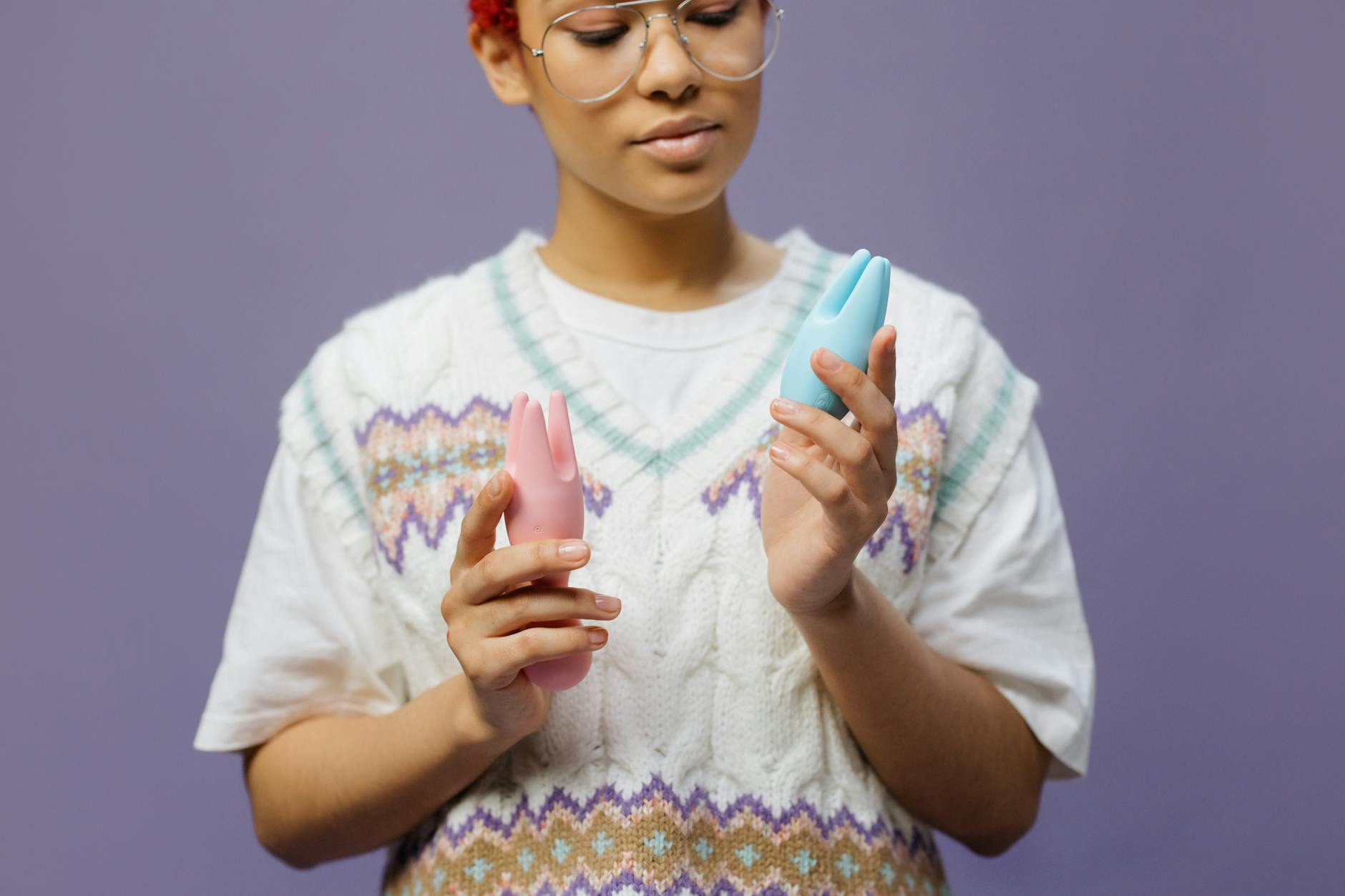
Photo by Diana ✨ on Pexels
How to stop timing yourself
If you're mid-session checking the clock, here's your permission to stop. Set the phone across the room. Don't wear a watch. Don't count seconds. The moment you introduce that pressure, you're no longer focused on sensation. You're focused on performance. And that's when everything slows down.
Instead, focus on what you notice. Does the Lem feel better at pulse mode or steady vibration. Does your clitoris prefer lighter pressure or deeper suction. Are you more responsive in the morning or evening. What thoughts help you stay present. These are the questions that actually matter.
When timing becomes a real problem
If you're genuinely unable to reach orgasm after thirty to forty minutes of active stimulation, even with a lemon clitoral vibrator, it might be worth checking in with a healthcare provider. This could indicate hormonal shifts, medication side effects, or a physiological pattern worth investigating.
But here's the distinction: can't reach orgasm at all is different from takes longer than you'd like. The first one warrants a conversation with a doctor. The second one is just your actual timeline, and it's fine.
FAQ: Your questions about lemon vibrators and orgasm timing
How fast do lemon vibrators make you orgasm compared to other vibrators?
Lemon vibrators with suction technology often speed up the process by one to three minutes on average, mainly because suction technology is highly efficient at nerve stimulation. But this varies wildly by person. Some people find them faster. Others find them more satisfying even if the timeline is the same.
Is it bad if it takes me longer than fifteen minutes to orgasm with a lemon vibrator?
No. Longer timelines are completely normal. If it's longer than it used to be, consider whether stress, hormones, or mental focus have shifted. If it's always been long for you, you're just wired that way. Nothing wrong with that.
Does intensity level on the Lem affect how fast you orgasm?
Usually yes. Higher intensities tend to accelerate the timeline for most people. But intensity and satisfaction aren't the same thing. Some people orgasm faster on a lower pattern setting that feels more nuanced. Start low and notice what your body responds to.
Why do I orgasm faster some days and slower other days with the same lemon vibrator?
Hormones, stress, arousal level, what you ate, whether you've had coffee, how much sleep you got. Your body isn't a machine. It's a system with dozens of inputs. Normal variation is normal.
Can you train your body to orgasm faster with lemon vibrators?
Not really, and I'd recommend not trying. But you can train your body to relax more, focus more, and remove mental blocks. When you do that, orgasm often becomes easier regardless of timeline. That's worth pursuing.
Should I be worried if my partner orgasms much faster with a lemon vibrator than I do?
Not at all. You're different people with different nervous systems. The real conversation is whether you both feel satisfied. If you do, timeline is irrelevant. If you don't, that's worth addressing directly.
The bigger picture
Orgasm timing with lemon vibrators matters mostly because it tells you something about your body, your stress level, and your arousal patterns. Fast isn't better. Slow isn't worse. Your personal timeline is just data. What matters is whether you're enjoying the process and reaching satisfaction consistently.
The best tool isn't the one that makes you orgasm fastest. It's the one that makes you feel most like yourself. For most people, that's a well-designed lemon clitoral vibrator. But only because it gets out of the way and lets sensation do the work.
Stop timing. Start noticing. The rest follows.