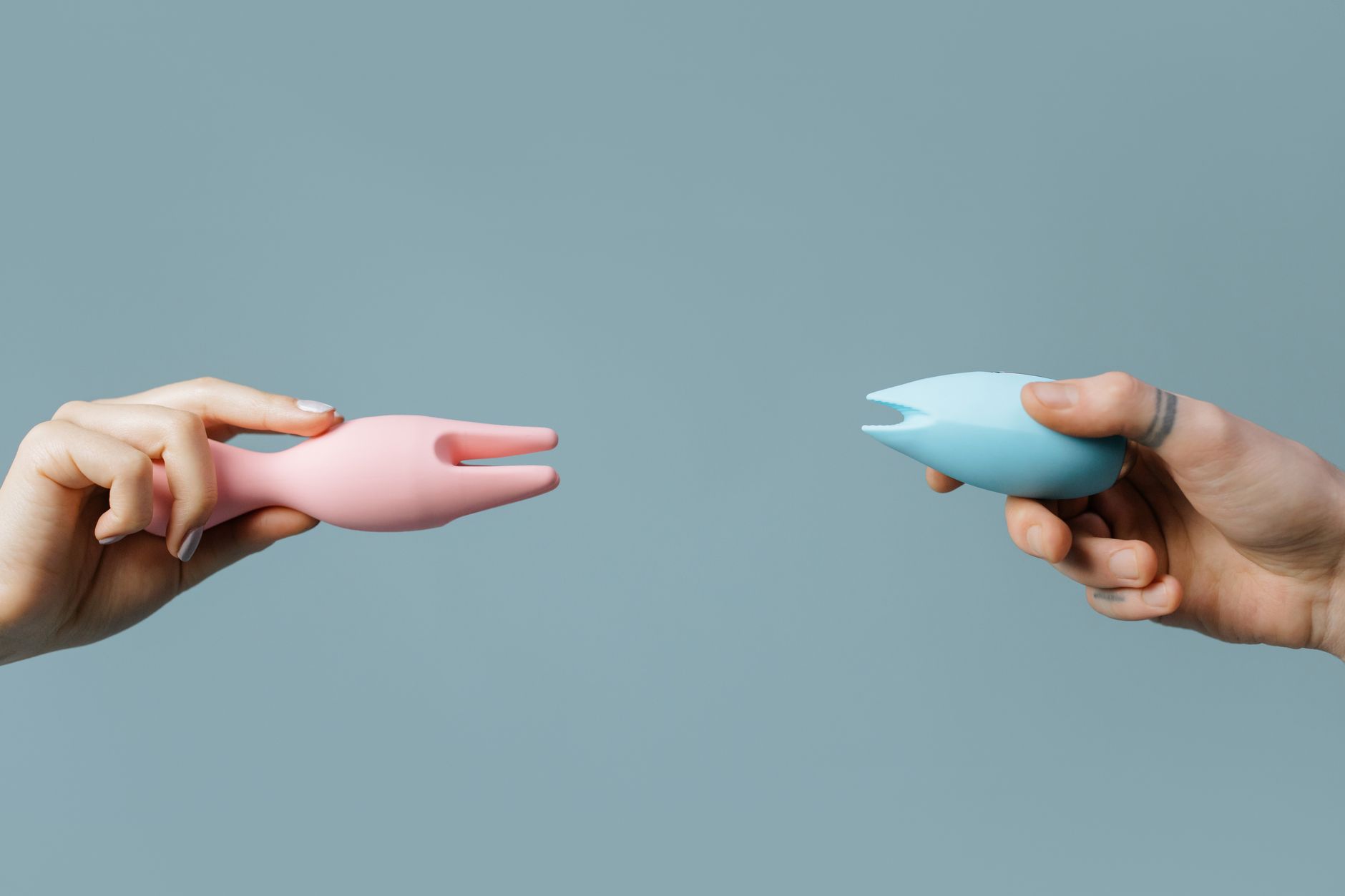
Here's the thing about clitoral sensitivity
Your clitoris isn't less responsive because something is wrong with you. It's responsive because you have more nerve endings packed into a smaller space than almost anywhere else on your body. That's not a limitation. That's an asset that needs the right tool.
If traditional vibrators feel too intense, too buzzy, or just plain uncomfortable, you're not alone. Millions of people with sensitive clitorises find that standard vibration devices overstimulate the area rather than pleasure it. And then there are lemon vibrators. These aren't just another toy. They work with your anatomy in a fundamentally different way.
Why traditional vibration feels intense for sensitive bodies
A standard vibrator works by rapid mechanical oscillation. It moves back and forth hundreds of times per second. That motion travels through silicone directly into clitoral tissue, stimulating the entire surface at once.
For some bodies, this is perfect. For others, it's like someone's drumming on the exact nerve that wants gentle attention, not percussion.
Here's what happens neurologically: the clitoris has three main types of touch receptors. One group picks up light pressure, another responds to sustained pressure, and a third detects vibration at specific frequencies. Traditional vibrators bombard all three categories simultaneously. If your nervous system is sensitive to vibrational input, that's overwhelming.
The clitoral structure also matters. The visible clitoral glans is just the tip. The body and crura extend internally, fanned under the labia. In sensitive bodies, tissue can be more permeable, more responsive to even light stimulation. That's why firm vibration can feel like static rather than sensation.
How lemon vibrators (and suction devices) are different
Lemon vibrators use pneumatic suction rather than direct vibration. Instead of rapid oscillation, they create gentle pulsing pressure and release cycles. This is a completely different sensation pathway.
Here's what that means in practice: suction stimulates the clitoris indirectly, drawing tissue gently upward, then releasing. This creates a massaging sensation rather than a buzzing one. The stimulation is broader and softer. You're not vibrating the nerve endings. You're creating rhythmic pressure that activates touch receptors without the intensity of mechanical buzz.
The Lem and other lemon clitoral vibrators activate deeper clitoral structures, not just the surface. The suction pulls blood into the area, increasing sensitivity in a way that feels amplifying rather than irritating. Many people report that suction-based devices make them feel less numb, not more stimulated.
For sensitive bodies, this distinction is massive. You get the benefit of increased arousal and orgasmic response without the sensation of being overstimulated.
The science of sensation thresholds
Clitoral sensitivity varies based on hormones, pelvic floor tension, tissue thickness, and yes, individual neurology. Some people's bodies are wired to detect minute changes in pressure. That's not weakness. That's precision.
The problem isn't the sensitivity itself. It's that most vibrators are designed for a middle-of-the-road nervous system. A standard vibrator operates at 60 to 100 decibels of vibration intensity. That's roughly the sound of a dishwasher. For a sensitive clitoris, that's too much, too fast.
A lemon sucker operates in a different frequency range. Rather than rapid oscillation, it produces pulsations that mimic natural arousal response. Your clitoris naturally engages in rhythmic changes during arousal. Suction-based devices follow that pattern instead of overriding it.
There's also a psychological component. If you've spent years avoiding stimulation because it felt uncomfortable, your brain has learned to brace against touch. That anticipatory tension makes genuine sensitivity worse. When you switch to a tool that actually feels good from the first touch, your body can relax. Relaxation itself increases sensation accuracy.
Building tolerance without forcing it
Let's be clear: building tolerance to a vibrator you hate is not a goal worth pursuing. You don't need to "train" your body to handle traditional vibration if it doesn't feel good.
That said, many people with sensitive clitorises find that lemon vibrators help them actually enjoy sensation more, not less. Here's a practical progression:
Week one: Use the lemon vibrator on the lowest setting, 10 to 15 minutes maximum. No pressure to come. The goal is neutral sensation, learning what the device feels like.
Week two: You can explore patterns (if your model has them) at the same intensity. Notice which patterns feel closest to how your body naturally responds.
Week three: Try increasing to medium intensity if the low setting starts feeling predictable. Your nervous system adapts faster than you'd think.
Beyond: Most people find a sweet spot between low and medium that feels both pleasurable and sustainable.
The key is that you're never chasing intensity. You're chasing sensation that feels good. For sensitive bodies, that often means less is literally more.
Why lemon clitoral vibrators feel gentler but more effective
This is the paradox many people discover: gentler stimulation often produces stronger orgasms.
When you're not fighting overstimulation, your nervous system can actually build arousal progressively. The clitoris engorges more gradually, sensation deepens, and the whole orgasmic response becomes more available.
With traditional vibrators, sensitive people often either numb out entirely or hit an overstimulation ceiling where pleasure plateaus. A lemon sucker lets you build without hitting that wall.
One more thing: suction devices create a seal, which means they work well even with external stimulation only. You don't need insertion or penetration for them to be effective. That's valuable for people whose sensitivity extends to internal tissue.
Practical settings for sensitive clitorises
If you're considering a lemon vibrator or suction device for the first time with a sensitive clitoris, here's how to set yourself up for success.
Start clothed or over underwear. The silicone barrier diffuses sensation further, making it even gentler. Once you're comfortable, direct contact is easy to explore, but there's zero shame in liking the feeling through fabric.
Position matters. Some people find that angle adjustment changes comfort dramatically. If you're sensitive, try the device at slightly different angles to find the angle that feels least irritating.
Timing: use lemon vibrators when you're already somewhat aroused, not cold. Fifteen minutes of foreplay or even fantasy first. Your clitoris becomes less reactive once blood has already started flowing.
Lastly, lube isn't about wetness for sensitive bodies. It's about protection. A silicone-based lube (compatible with water-based toys) can reduce friction-based irritation entirely.
When sensitivity is actually pain
If touching your clitoris creates sharp pain, burning, or stinging sensations, that's different from sensitivity. That's worth discussing with a gynaecologist.
Conditions like vulvodynia, pudendal neuralgia, or genitourinary syndrome can mimic sensitivity but are actually pain conditions. The solution isn't a gentler vibrator. It's professional assessment and targeted treatment.
A good clinic will test whether you have true pain or true sensitivity. Sensitivity feels intense, sometimes almost too much, but ultimately pleasurable. Pain doesn't. If you're unsure, ask yourself: if I liked the sensation but wanted it less intense, would I enjoy a gentler version? If yes, you likely have sensitivity. If the answer is no because the feeling itself is unpleasant, get checked out.
Building your pleasure practice around sensitivity
Having a sensitive clitoris is not a flaw to overcome. It's information about what your body needs.
Lemon vibrators and other suction-based devices work so well for sensitive bodies because they respect that information. They don't force your nervous system to accommodate a one-size-fits-most tool. Instead, they work with how you're actually wired.
The pleasure you're capable of isn't smaller because you're sensitive. It's different. Often deeper, more nuanced, more responsive to subtle variation. The right tool makes that apparent. And for many people, that tool looks like a lemon.
People also ask
Why does my clitoris feel numb with traditional vibrators?
Numbness often happens because traditional vibrators overstimulate the surface of sensitive tissue, causing temporary desensitisation. Your nervous system essentially stops responding to a sensation that feels too strong. It's the same reason your ear stops noticing a loud noise after a few minutes. Suction-based lemon vibrators avoid this by delivering gentler stimulation that doesn't trigger that shutdown response. You might also experience numbness if you're using a vibrator while tense or not fully aroused. Arousal genuinely changes tissue sensitivity.
Can I use a lemon vibrator if I have vaginismus or pelvic floor tension?
Absolutely. Many people with pelvic floor dysfunction actually prefer suction devices because they don't require insertion and the gentler sensation can help with relaxation rather than triggering tension. That said, pelvic floor issues deserve professional attention from a pelvic floor physical therapist. A lemon vibrator is not a treatment, but it can be part of your pleasure practice once you're working with a specialist. The combination of professional support plus tools that feel genuinely good is powerful.
Are lemon vibrators less intense than other vibrators?
Not necessarily less intense, just differently intense. The intensity of a lemon clitoral vibrator comes from suction pressure and pulse patterns, not from vibration frequency. Many people find them more intense in terms of building arousal, even at lower settings, because suction activates deeper clitoral structures. The question isn't whether they're more or less intense overall. It's whether the type of intensity feels good to your body. For sensitive people, it usually does.
How long does it take to adjust to a lemon vibrator?
Most people feel immediate difference. Within one or two uses, your nervous system recognizes that suction feels different from vibration. Full comfort and knowing your preferred intensity settings usually takes two to three weeks of regular use. That's about how long it takes your body to stop treating it as a novel sensation and start treating it as simply pleasure. Everyone's timeline is different, but patient exploration beats forcing it.
Why do lemon vibrators work for numb clitorises?
When clitoral sensation feels muted (from medication, hormones, or prolonged use of overstimulating vibrators), suction devices help by activating a different sensory pathway. Instead of relying on the vibration-responsive nerve endings, which might be temporarily fatigued, suction activates pressure receptors. It's like switching from email to text message. Same information, different channel. Many people find that using a lemon vibrator for a few weeks actually restores responsiveness to other forms of stimulation too, because the clitoris is getting varied, appropriate input.
Is it normal to prefer lemon vibrators over traditional vibration?
Completely normal. Roughly half the people who try both report preferring suction-based devices. Some prefer vibration. Some love them equally. There's no standard. Your preference is information about your nervous system. If you like lemon vibrators more, that's your body telling you something true. Honor that. There's no achievement medal for persisting with something that doesn't feel good just because it's popular.
The takeaway
Sensitive clitorises aren't broken. They're just more specific about what feels good. Lemon vibrators and other suction-based clitoral devices honor that specificity. They deliver pleasure in a way that respects your actual neurology rather than asking your body to adapt to a generic tool. If traditional vibration has left you numb, frustrated, or avoiding pleasure altogether, it's worth trying a different approach. Your capacity for satisfaction didn't decrease. You just needed the right tool to access it.
Questions? We're here. Reach out at /contact and let's talk about what might work for your body.