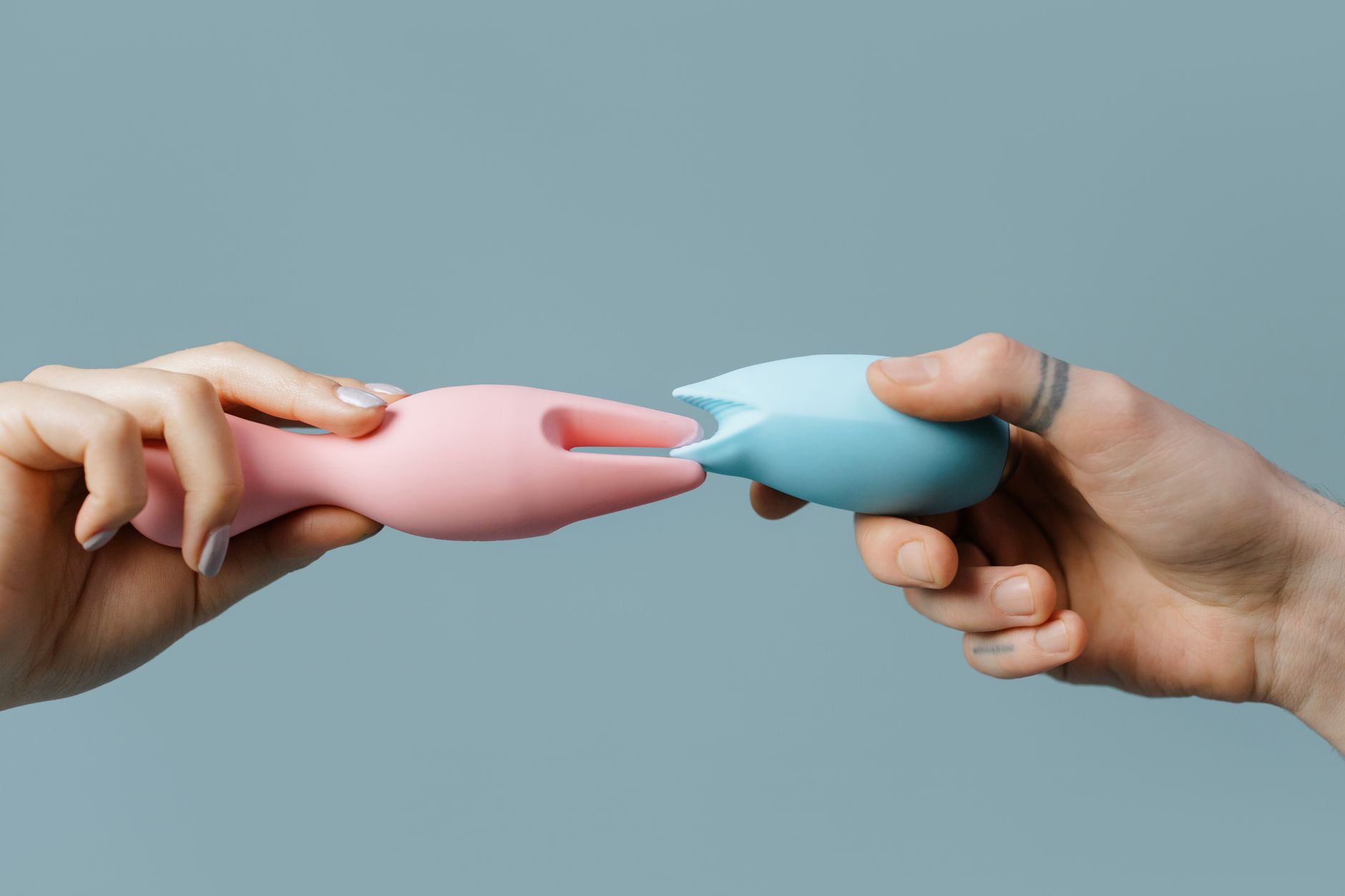
Let's be real about grief and desire
Grief doesn't just affect your emotions. It shuts down your body's pleasure responses, sometimes for months. That's not weakness or broken sexuality. That's your nervous system doing exactly what it's supposed to do when you're processing loss. The problem comes when you're ready to reconnect and don't know how.
I work with people navigating this transition constantly. The guilt is almost universal: "I shouldn't feel ready yet," or conversely, "Why don't I feel ready?" Neither of these thoughts helps. What helps is permission, patience, and a tool that doesn't demand anything from you.
That's where lemon vibrators come in. They're not flashy. They're not about performance. They're about sensation without pressure, which is exactly what a grieving body needs.
How grief changes your physical responsiveness
When you're in acute grief, your body is flooded with cortisol and adrenaline. Your nervous system is in survival mode. Pleasure circuits literally go offline because your brain has prioritized threat detection over sensation. This is why grief feels numb, even when you're crying. You're experiencing sadness and numbness simultaneously because different systems are activated.
As time passes and the acute phase softens, something shifts. Your nervous system begins to notice safety again. That's when the body slowly begins opening up to sensation. But it often doesn't open up to pleasure the way it did before. Instead, it opens cautiously, in small moments, testing whether it's safe to feel good again.
This is also when guilt shows up. "My loved one is gone and I'm having an orgasm?" The thought feels like betrayal. It's not. It's your body healing. Your nervous system recalibrating. Your humanity asking to be alive again.
Why lemon vibrators feel different when you're grieving
Most traditional vibrators demand engagement. They require you to know what you want, to direct stimulation, to have a goal. When you're returning to pleasure after loss, you don't necessarily have any of those things yet. You have sensation, curiosity, and hesitation in roughly equal measure.
Lemon vibrators work differently. The suction technology engages your clitoral nerves without the intensity of direct vibration. You can start at the lowest setting and genuinely feel nothing but a gentle pulse. There's no performance pressure. There's no need to "get there" or achieve anything. You're just experiencing sensation for its own sake.
The design also matters psychologically. Lemon vibrators look like nothing threatening. They're approachable. They don't feel like entering a new sexual era. They feel like reconnecting with yourself, which is exactly what you're doing.
Starting small and building back
If you're grieving and considering pleasure again, timing matters less than readiness. You can't rush this. But you can be intentional about it.
Start by using your lemon vibrator in a completely pressure-free context. Not in bed. Not with a partner. Alone in a bath, or sitting with a blanket, or however your body feels safest. Don't aim for arousal or orgasm. Aim for sensation. Turn it on at the lowest setting and notice what you feel. Some people feel warmth. Some feel a gentle buzz. Some feel nothing the first time and that's fine too.
The goal here is nervous system recalibration, not climax. You're teaching your body that pleasure is possible again without needing to mean anything. Without needing to change anything else in your life.
Many people find that they need 3-4 solo sessions before anything feels genuinely pleasurable. That's normal. Your nervous system is learning that it's safe to respond again. Don't rush it. This is actually where the healing begins.
The role of your breath and body awareness
Grief holds tension in your body. In your shoulders, your jaw, your pelvic floor. When you're ready to reconnect with pleasure, that tension becomes a barrier. Your body's literally braced against feeling.
Before you turn on your lemon vibrator, spend 2-3 minutes noticing where you're holding tension. Don't try to fix it yet. Just notice. Then take three deep breaths, letting your exhales be longer than your inhales. This activates your parasympathetic nervous system, the one responsible for rest and recovery.
Then use the vibrator. If you notice tension returning, pause. Breathe. The goal is gentle reconnection, not forcing pleasure through a wall of tension. Your body will tell you when it's ready to go deeper. Listen to it.
When to include a partner in this process
Some people want to return to pleasure entirely alone first. Others feel ready to involve a partner much earlier. There's no right answer. But if you're in a relationship, communication matters more than timing.
Tell your partner what you're exploring and why. Something like: "I'm starting to feel ready to reconnect with my body. I might use a vibrator to help with that. I'm not sure yet if or when I want that to involve you." That's enough. You're not asking permission. You're extending an invitation to the process without demanding they participate.
If and when you do involve a partner, start with something simple. They could be in the room while you explore solo. You could be touching them while you use your lemon vibrator. You could explain what sensation you're experiencing. This isn't about reaching orgasm together. It's about rebuilding the experience of pleasure as a shared, safe thing.
Many couples find that this process actually deepens their connection. Witnessing your partner gently reconnecting with their own pleasure is tender. It's not sexual in the performative sense. It's intimate.
Handling unexpected emotions during pleasure
Here's something nobody warns you about: you can be reconnecting with pleasure and suddenly feel sadness, guilt, or even anger. You might orgasm and then cry. This is entirely normal. Your nervous system is processing the fact that life continues, that you can feel good, that your loved one is still gone.
When this happens, don't stop. Don't judge it. Let it happen. If you want to cry, cry. If you want to take a break, take one. Your body is doing exactly what it needs to do. There's nothing wrong with pleasure that arrives alongside grief. They can coexist.
If the emotions feel overwhelming, pause and reach out. To your therapist, to your partner, to a trusted friend. Reconnecting with pleasure after loss sometimes brings up stuff you need help processing. That's not a sign you're doing it wrong. It's a sign you're doing the deeper work.
Moving forward at your pace
There's no timeline for returning to pleasure after grief. Some people feel ready in weeks. Others take months or years. The lemon vibrator isn't going anywhere. It'll be there when you're ready. When you're not ready is information too. It means your nervous system needs more time, and that's completely valid.
What matters is that you're not waiting for permission from anyone else to explore this. Your pleasure matters. Your body's slow return to sensation matters. Your willingness to reconnect with yourself after loss is a form of self-respect.
Start solo. Start slow. Start with a tool that meets you where you are, not where you think you should be. The lemon vibrator is designed exactly for this kind of gentle reconnection. It doesn't demand. It invites. And right now, that's what your body probably needs most.
FAQ: Returning to pleasure after grief
How long after a loss should I wait before trying pleasure again?
There's no magic number. Most grief counselors agree that acute grief lasts 6-12 months, but your body's readiness to engage with pleasure is separate from that timeline. Wait until you feel a genuine spark of curiosity, not guilt or pressure to "move on." If you don't feel anything yet, that's information. Your nervous system will let you know when it's ready. Trust that.
What if I feel guilty about enjoying sensation or orgasm after a loss?
Guilt is a normal part of grief. It doesn't mean you're doing anything wrong. Many people experience what grief specialists call "survivor guilt" which extends to pleasure. Remind yourself: your pleasure doesn't diminish your love or respect for the person you lost. Your body's capacity to feel good is separate from your capacity to grieve. Both can exist.
Should I tell my partner I'm using a lemon vibrator while grieving?
If you're in a committed relationship, yes, communication helps. You don't owe graphic detail, but something like "I'm exploring reconnecting with my body on my own right now" gives them context and prevents them from feeling excluded. If they're supportive, they might eventually want to participate. If they're not ready, that's also information worth processing together, ideally with a couples therapist.
Can I use my lemon vibrator while grieving if I have a partner?
Absolutely. Solo pleasure and partnered pleasure serve different purposes. Solo reconnection is about YOU rediscovering your own nervous system and capacity for sensation. That's not a replacement for partnered intimacy. It's a foundation for it. Many couples find that solo exploration actually improves their partnered sex because each person is more connected to their own body.
What if I start using a lemon vibrator and don't feel anything?
That's okay. Numbness is part of grief. Your nervous system might not be ready yet to register sensation as pleasurable. Keep the vibrator at the lowest setting. You're not testing yourself. You're gently inviting your body to notice. Sensation often returns before pleasure does. You might feel the vibration without it feeling good yet. That's progress. Give it time.
How do I know when I'm ready to progress from solo exploration to including a partner?
You'll know. You'll have used your lemon vibrator a few times, felt genuine pleasure (even small), and thought, "I'd like to share this." Or your partner will gently ask. Or you'll have a moment of clarity where the barrier between solo and partnered pleasure dissolves. There's no checklist. The readiness is its own signal. Trust it when it arrives.