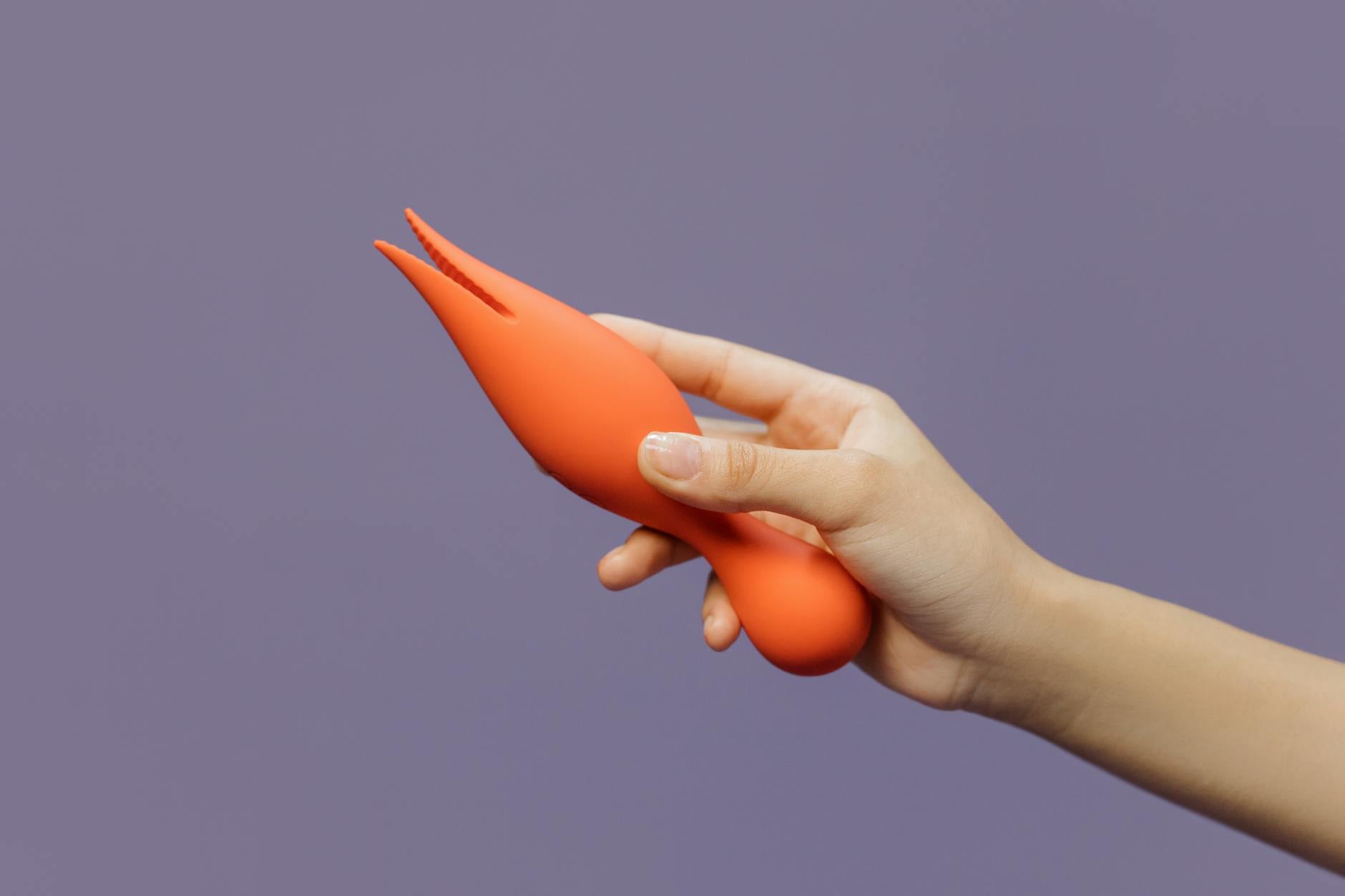
When arousal starts but doesn't stick
Here's the honest thing: difficulty with sustained arousal is wildly common and almost nobody talks about it. You might get interested, even turned on at first, and then. nothing. The feeling flattens. Your brain drifts. Your body loses the thread. By the time you've mentally checked back in, you're back at square one.
This isn't laziness or low libido. It's a mechanical problem, and lemon vibrators are specifically designed to solve it.
What sustained arousal actually requires
Arousal isn't a single switch. It's a chain reaction. Your nervous system has to stay focused on sensation. Your blood flow has to maintain. Your brain has to keep filtering out distractions. Stress, hormones, medications, attention patterns, relationship stuff, past trauma, even what you ate earlier that day. all of those things interrupt the circuit.
For people with vulvas, the clitoris is hyperresponsive to novelty. Once a sensation becomes familiar, the nerve endings actually habituate to it. They stop firing at the same intensity. This is neurobiology, not a personal failing.
Traditional vibrators run a consistent, predictable pattern. Your nervous system adapts to it within minutes. The sensation feels pleasant but flat.
Why air-suction lemon vibrators work differently
Lemon clitoral vibrators use suction instead of direct vibration. That changes everything. The sensation is rhythmic but not repetitive in the same way. The pressure fluctuates. The stimulation is gentler on the tissue but somehow more intense to the nerves.
Most importantly: the pattern recruits different neural pathways. Your body stays surprised. You stay engaged.
I've worked with clients who couldn't sustain arousal with partners or with wand vibrators, and when they switched to a Lem, the problem solved itself. Not because lemon suction vibrators are magic. Because the novelty kept their nervous system in the game.
The pacing strategy that matters most
Don't start at full intensity. This sounds counterintuitive but it works. If you activate your clitoris at maximum stimulation too early, you'll hit arousal quickly and then habituate faster.
Start on pattern 1 or 2. Spend 3 to 5 minutes here. Let arousal build slowly. Your nervous system needs time to recognize and stay tuned to the sensation. Once you genuinely feel engaged, you can increase intensity.
This is the opposite of what you might do with a partner or your hand, where you sometimes want quick escalation. With lemon vibrators specifically, the slower opening pays off by extending the window where you stay aroused.
The distraction containment system
Half of sustaining arousal is managing what interrupts it. That's not mystical. That's logistics.
If you're worried about noise, get a quieter device upfront. The Lem is quieter than many clitoral vibrators, which matters if you're in a shared space. Worry kills arousal faster than anything else.
If you're mentally rehearsing your to-do list, set a phone timer for 20 minutes beforehand. Not during sex, before. Tell yourself that for this block, other things can wait. Your brain will actually believe it because it has evidence.
If you're checking whether you're aroused enough, stop. That's checking the pot while it boils. Put your attention on sensation, not on evaluation. This is probably the single biggest attention pattern that kills sustained arousal, and it's fixable with practice.
The right environment, actually matters
Temperature affects arousal more than people realize. If you're cold, blood flow goes to your core. Your clitoris gets less engorgement. Warm up the room or get under a blanket. This isn't fussy. It's physics.
Lighting matters too. Not because of romance, but because your nervous system reads brightness as activation. Dimmer lighting (not darkness, dimmer) helps your body stay in the parasympathetic state where arousal builds. Bright overhead lights signal alert mode.
Time of day: many people with vulvas arousal is easier in the morning or early evening. If you've been trying at 11 p.m. after a full day and nothing's working, that's not a sign something's wrong. That's just circadian biology.
When sustained arousal struggles are actually about relationship dynamics
Sometimes difficulty sustaining arousal isn't mechanical. It's relational. If you're with a partner and you're tracking whether they're enjoying this, or worried about taking too long, or wondering if you're doing it right, your arousal will collapse. Every single time.
This is where having a conversation matters more than any vibrator. Tell your partner: I need to be able to focus inward without managing your experience. That sounds clinical, but what it means is: I need you to be genuinely fine with however long this takes and not transmit any impatience.
If that conversation feels too vulnerable, that's information. How to Use Lemon Vibrators When Your Partner Avoids Pleasure Conversations covers exactly how to navigate that.
The arousal reset protocol
If you've been struggling with sustained arousal for months, your nervous system might be stuck in a groove. Here's what helps: take a break from partnered sex or solo sessions for 2 to 3 weeks. Seriously. No pressure, no expectations.
When you come back, use your lemon clitoral vibrator alone, in a comfortable space, with zero timeline. No goal of orgasm. Just exploration. Notice what patterns of stimulation feel good. Where does your attention naturally want to land. What intensity level keeps you engaged.
This recalibrates your body's own feedback loop. When you reintroduce partnered sex or add pressure to finish, your nervous system remembers what sustained pleasure actually feels like.
The medication angle
If sustained arousal just started getting harder, ask yourself: did anything change in the last 6 months. New medication. New hormonal birth control. A change in antidepressant dose. All of those things affect arousal directly.
This isn't something to live with quietly. Talk to your prescriber about whether timing, dosage, or switching to something else is an option. Lemon vibrators help, but they're not a workaround for a medication problem. They're a tool to use while you're also addressing the root cause.
When to reframe what sustained arousal means
Here's what I notice: people often expect arousal to look like a continuous line climbing upward. Sustained arousal that stays at 8 out of 10 the whole time.
Actual arousal is more like a wave. It builds, plateaus, dips slightly, builds again. That's normal. That's not failure. The goal isn't continuous high-intensity sensation. It's staying in the game. Staying engaged. Staying tuned in.
Lemon vibrators help with that because the suction pattern interrupts habituation. But part of what helps is also redefining what sustained arousal actually means for your body.
FAQ: Arousal and lemon vibrators
How long should I use a lemon clitoral vibrator if I'm struggling to stay aroused?
There's no hard cap. Some people need 8 to 10 minutes to build arousal, then another 5 to 10 to climax or reach a plateau they're satisfied with. Others need 20 minutes total. The fact that it takes longer isn't wrong. Give yourself the time your body actually needs without rushing. Lemon suction vibrators are designed to be used for extended periods without discomfort, so time isn't the limiting factor.
Can medication really kill sustained arousal, or am I making excuses?
Medication absolutely affects arousal. SSRIs, some blood pressure medications, hormonal birth control. they all have documented effects on sustained arousal and libido. If you started a new medication and arousal got harder, that's not a character flaw. That's a medication effect. Talk to your prescriber. There are often alternatives that won't impact arousal the same way.
Should I use a lemon vibrator alone or with a partner if I have trouble sustaining arousal?
Start alone. This lets you figure out what your body actually needs without the added cognitive load of managing someone else's experience. Once you know what patterns of stimulation keep you engaged, you can introduce a partner. Some people find that partnered touch plus a lemon vibrator is perfect. Others prefer the simplicity of solo use. There's no rule.
Does the intensity level matter if I'm struggling with sustained arousal?
Intensity matters, but probably not the way you think. Lower intensity for the first few minutes actually keeps your nervous system engaged longer because it hasn't hit the peak yet. Once arousal builds, you can increase to whatever feels best. Start low, let arousal build, then turn up. That sequence works better than starting at maximum.
Is sustained arousal difficulty a sign I don't actually want sex?
Not necessarily. Some people have low libido, true. But difficulty sustaining arousal specifically is often a different problem. You might genuinely want sex, feel interested, and then your nervous system drops the signal. That's not disinterest. That's a signal-processing issue that lemon vibrators and environmental tweaks can usually fix.
How often should I use a lemon vibrator if arousal is hard to sustain?
Use it as often as feels good, but approach it with curiosity rather than pressure. If you're using it to troubleshoot arousal patterns, 2 to 3 times per week is useful because you get pattern data. But don't turn it into another obligation. The goal is to help your nervous system remember what engagement feels like, not to create a new performance pressure.
The reset happens gradually
Sustained arousal isn't something that snaps back overnight. Your nervous system has been running patterns for years. The good news: it's rewireable. Lemon clitoral vibrators are specifically useful here because they interrupt habituation in a way traditional vibration doesn't.
But the real work is attention. Setting up your environment to support focus. Having the conversation with your partner about pacing and pressure. Being honest with yourself about whether a medication change might be the culprit.
Your body wants to stay engaged. You're not broken. You just need the right conditions and the right tool. Hella Nancy Lems makes lemon vibrators that are built for exactly this. The rest is about giving yourself permission to take the time you actually need.