Let's be real about stress and desire
Stress doesn't just kill your mood. It kills the physical wiring that creates arousal in the first place. When your nervous system is in crisis mode, it shuts down nonessential systems. Guess what the body considers nonessential when you're drowning in deadlines, family stuff, or financial worry? Sex.
The cortisol flooding your system triggers fight-or-flight. Your blood diverts away from your genitals and toward your muscles and brain. Your clitoris literally gets less blood flow. Your arousal takes longer to build. And your brain, already scattered across twelve tabs of anxiety, can't focus enough to feel pleasure even if your body wanted to cooperate.
Here's the thing nobody tells you: you can rebuild this. Not by resting (though rest helps). Not by your partner trying harder (that usually makes it worse). But by using the right tool to signal to your nervous system that pleasure is safe again.
Why lemon vibrators work differently when stress has tanked your desire
Most vibrators demand engagement. You need to position them perfectly, find the right rhythm, manage your expectations. When your nervous system is fried, that's another task on an impossible list.
Lemon clitoral vibrators, especially those using air-suction technology like the Lem, work differently. The sensation is gentler on first contact, which matters when your body is guarded. Suction creates a consistent stimulation pattern that your brain can actually track and anticipate, which helps rebuild the neural pathways for arousal. You're not chasing a feeling. You're letting the tool do the work while you just receive.
This distinction is crucial when stress has made you skeptical that pleasure is even possible anymore.
The stress-response arousal gap
Here's what happens physiologically when chronic stress has suppressed your libido. Your baseline cortisol stays elevated even when the immediate stressor passes. This keeps your sympathetic nervous system (the alert one) dominant over your parasympathetic nervous system (the one that allows relaxation and arousal).
Your clitoris still has all the nerve endings it ever did. Your brain still has the capacity for pleasure. But the nervous system is essentially locked in a protective stance, convinced that sex is a luxury you can't afford right now. Your body is not broken. It's doing exactly what it thinks it should be doing.
Lemon vibrators help because they can activate pleasure without requiring the parasympathetic nervous system to be fully online first. The sensation is direct enough to interrupt the stress pattern, gentle enough that it doesn't feel like another demand on your depleted system.
When to use a lemon vibrator in the stress cycle
Timing matters more than you'd think.
If your stress is acute and urgent (deadline tomorrow, major argument today), skip the vibrator. Your system genuinely can't process pleasure when you're in active crisis mode. It'll feel like performance pressure, which makes everything worse.
But if your stress is chronic (months of overload, constant low-grade anxiety), this is exactly when a lemon vibrator becomes useful. Use it when the immediate stressor has quieted slightly. After work, not during. After a hard conversation, not mid-conflict. Give your nervous system a chance to downshift from red alert to orange alert.
Start with just ten minutes. Position yourself somewhere you feel genuinely safe. Not your bed if your bed has become a place of obligation. Not your couch if your partner is nearby. Choose a space where your nervous system doesn't have competing messages.
The pressure-free protocol
This is non-negotiable when you're rebuilding arousal after stress has suppressed it.
First rule: no orgasm goal. Your only job is to notice sensation. Full stop. If you come, great. If you don't, that's also fine. The point is to remind your body that pleasure is available, not to extract a specific outcome.
Second rule: start at the lowest setting. On the Lem, that's level one. On other lemon vibrators, whatever the gentlest pattern is. You're not looking for intensity. You're looking for consistency. A steady, predictable sensation that your nervous system can relax into instead of tense against.
Third rule: no multitasking. Not even scrolling. Not even thinking about what's for dinner tomorrow. If your mind wanders (it will), that's fine. Gently come back to the sensation. This is literally retraining your brain to focus on pleasure as a legitimate use of attention.
How to integrate a partner if you have one
If you're in a relationship and stress has tanked your libido, your partner might interpret this as rejection of them. It's not. It's rejection of the high-demand sex that requires you to perform arousal you don't feel.
Invite your partner to the room but not to the performance. Let them read while you use the lemon vibrator. Not as foreplay. As its own thing. This signals that you're rebuilding your relationship with pleasure, and their presence is welcome, but so is your autonomy.
If that feels too exposed, that's fine too. Solo exploration first. Partnership later. The order matters less than the consistency. What rebuilds desire after stress is repetition, not intensity.
The recovery timeline
Don't expect instant results. When chronic stress has suppressed your libido for months, it usually takes weeks of consistent engagement to rebuild arousal.
Here's what you might notice instead.
Week one to two: no new sensation, maybe just relief that you're trying. That counts.
Week two to four: tiny moments of "oh, that feels nice" that last three seconds and vanish. This is your nervous system remembering what pleasure is. These micro-moments are the actual work.
Week four to six: pleasure starts to linger instead of immediately shutting off. Your clitoris stays engaged for longer. Your thoughts stay with the sensation instead of jumping back to worry.
Month two onward: genuine arousal returns. Not like it was before stress hit (it'll probably feel different). But real, authentic, you-generated desire instead of obligation masquerading as interest.
This timeline isn't universal. Some people move faster. Some slower. The variable that matters most is consistency, not duration. Five minutes three times a week rebuilds more effectively than a desperate forty-minute session once a month.

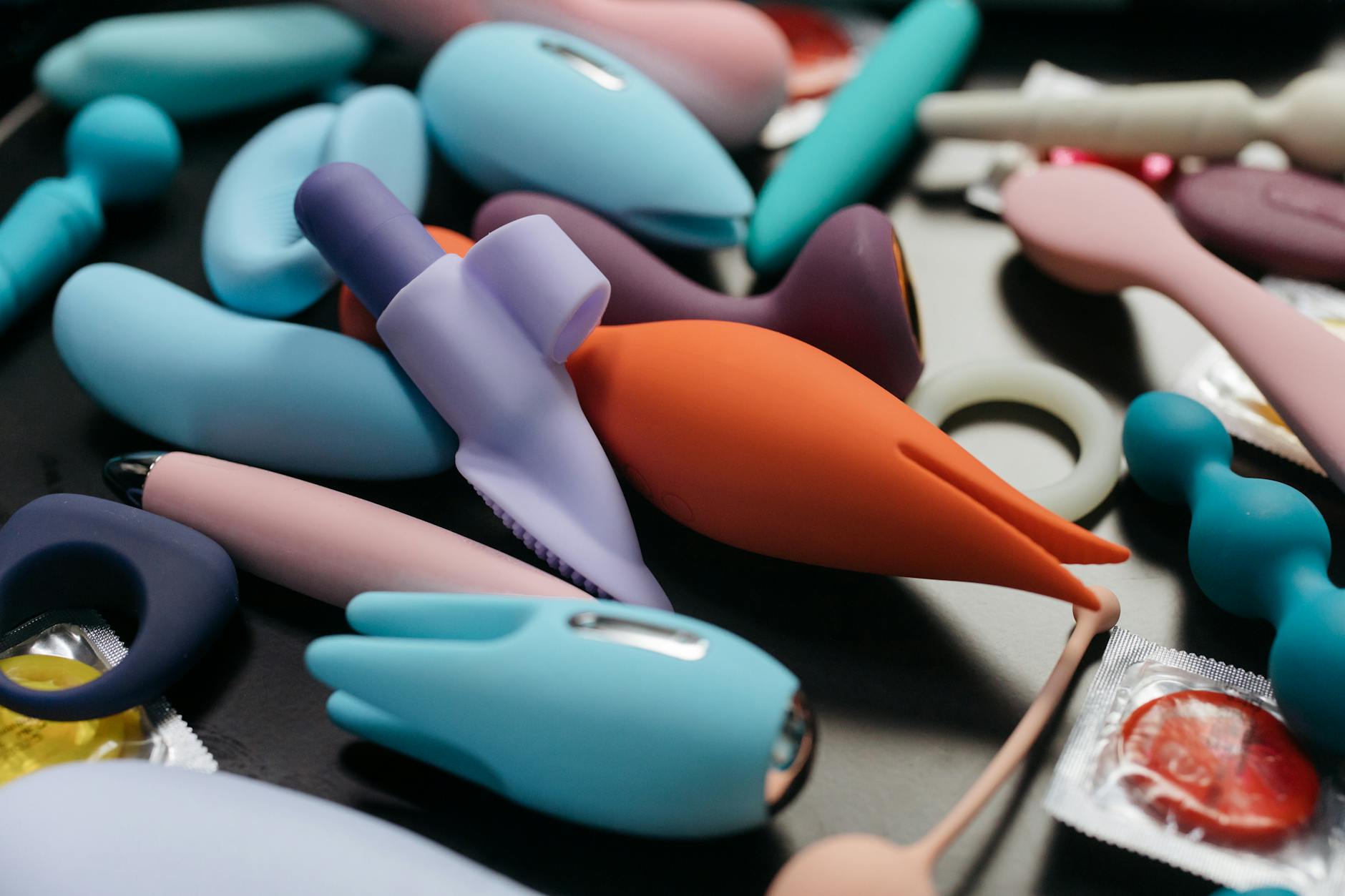
Photo by DRT.fm on Pexels
What changes in your nervous system
When you consistently use a lemon vibrator while your nervous system is in recovery mode, you're actually retraining your vagus nerve. This is the nerve that controls the shift between fight-or-flight and rest-and-digest.
Repetitive pleasure signals, even if they don't lead to orgasm, tell your vagus nerve that safety and pleasure can coexist. That being relaxed doesn't mean you've dropped your guard. That receiving good sensation is compatible with your actual life.
Over time, your baseline cortisol drops. Your parasympathetic nervous system becomes more accessible. And suddenly, desire starts showing up again without you having to force it.
This is why lemon sexual toys work so well for this specific problem. They're not trying to make you come. They're trying to retrain your system to remember that pleasure exists and is safe.
When to talk to someone else
If you've been using a lemon vibrator consistently for eight weeks and feel zero change in desire or arousal, it might be worth checking in with your doctor or a therapist.
Sometimes low libido from stress is a straightforward nervous-system thing. But sometimes it's pointing to something else. Depression often wears a stress costume. Hormonal shifts can tank desire independent of emotional state. Unresolved relationship issues can masquerade as low libido.
A good therapist, especially one trained in how stress affects the body, can help you figure out if you're dealing with pure nervous-system shutdown or if something else is going on underneath.
The bigger picture
Stress and low desire isn't a personal failing. It's not that you're broken or that you don't love your partner or that your sex drive is just naturally low. It's that your system has appropriately deprioritized pleasure to handle what it perceives as a threat.
Using a lemon vibrator while rebuilding arousal after stress is a way of telling your nervous system: I'm safe enough now to feel good again. I have permission to prioritize my own pleasure. My body deserves this.
That's the actual work. The vibrator is just the tool.
Frequently asked questions
Can a lemon clitoral vibrator help if my stress is still happening?
It can, but it works better once the acute stressor has passed or you've developed a baseline coping strategy. If you're in active crisis mode, your nervous system will likely resist pleasure as a distraction from what it perceives as danger. Start using it when you've moved from red alert to orange alert.
How is using a lemon vibrator different from using my partner for this?
A partner can definitely help rebuild desire, but they can also add pressure. A vibrator is pressure-free. You're not managing someone else's expectations or timing. You're not performing arousal for an audience. It's purely about you and your nervous system learning to feel good again on your own timeline.
What if I feel guilty taking time for pleasure when I'm stressed?
This is super common and super worth examining. Your nervous system is framing pleasure as selfish or irresponsible. But rebuilding arousal after stress is actually self-care in the most literal sense. You're not being selfish. You're retraining your system to recognize that you deserve good sensations, full stop. That's not indulgence. That's maintenance.
Do I need to use a lemon vibrator specifically, or would any vibrator work?
Any quality vibrator can help, but lemon clitoral vibrators, especially air-suction versions, tend to work better for this specific situation because they're gentler on first contact and create a consistent pattern your nervous system can relax into. If you're just starting out, the Lem offers a great entry point without overwhelming pressure.
How often should I use it if I'm rebuilding arousal from stress?
Consistency beats duration. Three ten-minute sessions a week rebuilds more effectively than one hour-long session monthly. Your nervous system needs repetition to relearn safety around pleasure. Start with whatever frequency feels sustainable. Three times a week is a good baseline.
What if my partner wants sex but I'm using a vibrator to rebuild desire?
This is a conversation worth having. You might say something like: "I'm rebuilding my arousal because stress has affected my desire. Using this tool helps me remember what pleasure feels like. This isn't about you or our relationship. It's about me finding my way back to myself." A partner who loves you will understand that this is actually helping your shared sex life, not replacing it.
References and sources
Polyvagal Theory and Nervous System Regulation (Porges, S. W., 2011). The Polyvagal Theory: Neurophysiological foundations of emotions, attachment, communication, and self-regulation. W.W. Norton & Company.
Stress and Sexual Function. Srivastava, K. C., et al. (2013). "Stress, Anxiety, and Depression and Their Effects on Sexual Function in Married Women." Indian Journal of Psychiatry, 55(S2), S268–S275.
Cortisol and Desire. Exton, M. S., et al. (2000). "Cardiovascular, Endocrine, and Psychological Responses to Psychological Stress: The Impact of Experience and Sex." Psychoneuroendocrinology, 25(8), 787–802.
For more on rebuilding pleasure after relationship challenges, see our guide on how to use lemon vibrators when reconnecting with your partner after time apart. And if stress has affected other areas of intimacy, lemon vibrators when your body feels unfamiliar after time away covers a related dynamic.