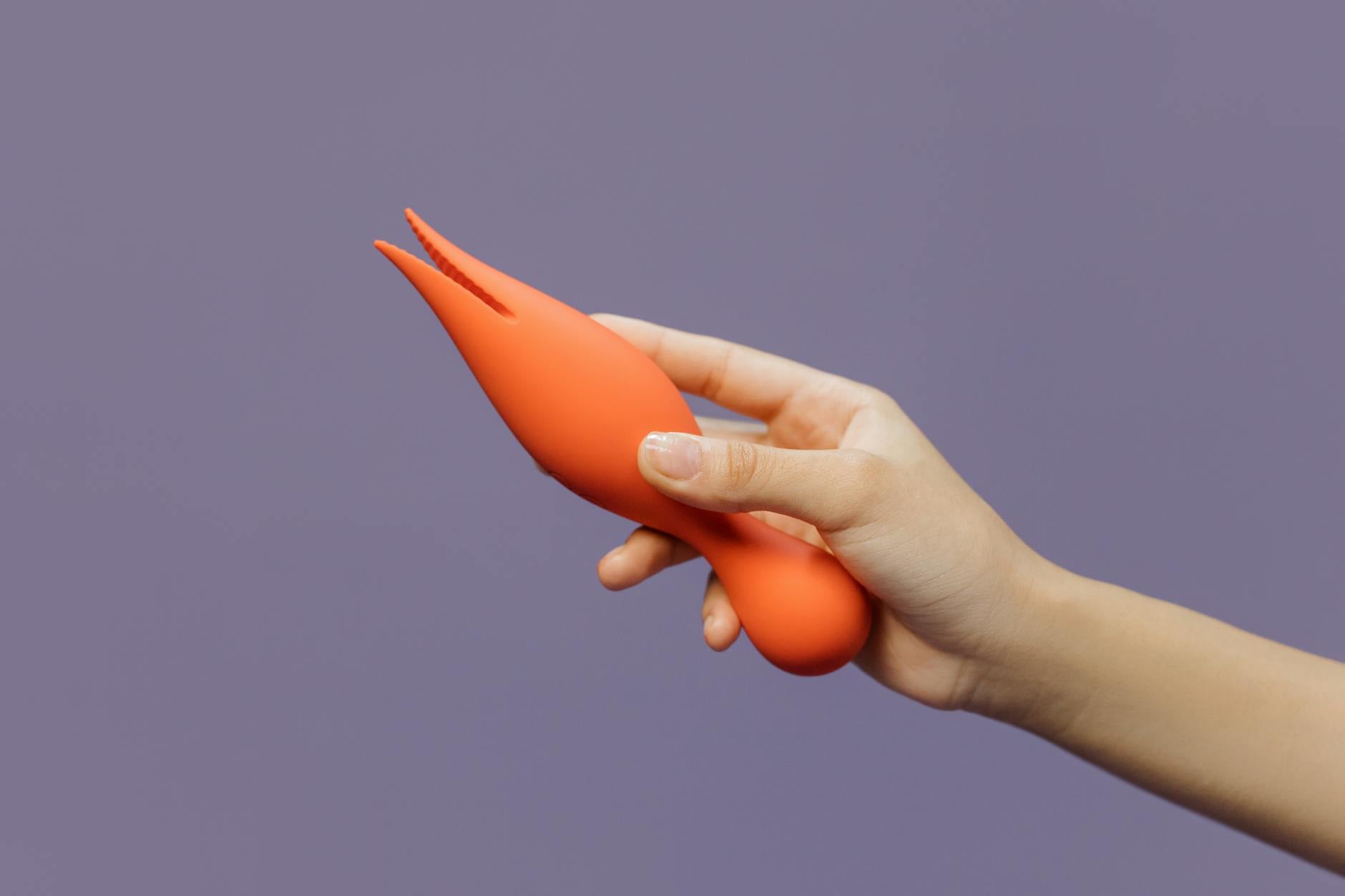
How to Use Lemon Vibrators When There's Pain During Penetration With a Partner
Let's be real. Penetration pain in a relationship doesn't just affect one person. It affects the whole dynamic. The receiving partner tenses up, the giving partner second-guesses themselves, and suddenly sex becomes something you're both dreading instead of wanting.
Here's what actually helps: lemon clitoral vibrators. Not as a workaround. As a redesign.
Penetration pain often comes from tension, insufficient arousal, or physical friction that's just incompatible with your current body. A lemon vibrator solves for all three, because it shifts focus away from the part that hurts and toward the part that can feel incredible. Your clitoris doesn't care about penetration pain. It just wants attention.
Why penetration pain happens with partners
When you're with someone, pain during penetration usually shows up for one of three reasons.
First, anticipatory tension. You've had pain before, so your pelvic floor tightens before penetration even starts. That tension makes penetration feel worse, which increases the tension, which makes the next time worse. It's a cycle.
Second, arousal mismatch. Your partner is ready, you're still warming up. Penetration happens before your body is, and the friction that feels fine when you're fully aroused feels raw when you're not.
Third, structural incompatibility. Sometimes what worked in one phase of your body doesn't work now. Vaginal tissue thickness changes with hormones, age, medication, and stress. Penetration depth and angle that felt great at 25 might feel sharp at 40. That's not failure. That's biology.
All three can improve dramatically when you add clitoral stimulation to the equation. Arousal builds faster, pelvic floor tension releases, and most importantly, pleasure becomes the focus instead of pain management.
How lemon vibrators work differently than vibration alone
The Lem vibrator and similar lemon-design clitoral suction toys use gentle pulsing suction instead of buzzing vibration. That matters for couples navigating pain because suction builds arousal differently than vibration does.
With traditional vibration, the clitoris gets maximum stimulation intensity immediately. That can feel intense if you're tense or not fully aroused yet. Suction, by contrast, draws blood into the tissue gradually. Arousal builds slower but deeper. By the time your partner begins penetration, you're not just physically aroused. You're mentally in the experience.
The other advantage: when you're already experiencing pain with penetration, lemon clitoral vibrators give you a proven pleasure sensation that has nothing to do with the area that hurts. You can rebuild the neural pathway from "sex equals pain" to "sex equals pleasure." That rewiring is huge for couples.
The conversation before you introduce a toy
This is the part most couples skip, and it's why toys sometimes feel like they're fixing a relationship problem instead of just adding pleasure.
Before you bring a lemon vibrator into partnered sex, talk about the pain separately from sex. What triggers it? Is it certain positions, certain depths, certain times of day? Is it there from the start or does it build? Does your partner's anxiety contribute to your physical tension?
Then talk about what you each want from introducing a toy. Your partner might think a vibrator means they're not enough. They're not. The vibrator means you're expanding what's possible together.
The conversation doesn't have to be serious. "I want us to try something that takes the pressure off the part that hurts and puts it on the part that feels amazing" is specific and kind. It's not "we need to fix me." It's "here's what I want us to do."
How to integrate lemon vibrators into partnered sex
Start with clitoral stimulation before penetration begins.
Use your lemon vibrator on the lowest setting for five to ten minutes while your partner touches you everywhere else. This does three things simultaneously. It builds genuine arousal (not the kind where you're lying there waiting). It releases pelvic floor tension because pleasure overrides tension. And it gives your partner something to do besides worry about whether you're okay.
Then, when penetration happens, one of two things occurs. Either you keep the vibrator on during penetration (most partners can manage this without too much coordination), or you have penetration without the vibrator and stop immediately if pain appears, then go back to clitoral stimulation until arousal rebuilds.
The second approach sounds inefficient until you realize that you're not trying to "push through" pain. You're saying pain is the stop sign, and pleasure is the reset. Over time, your body learns that sex with your partner doesn't lead to pain. It leads to sensation and relief.
When both partners need to share the learning curve
If your partner has never seen you use a lemon vibrator before, let them watch when you're alone first. Show them the settings, explain what it feels like, let them see how your body responds. This removes the mystery that sometimes makes partners feel like toys are competition.
Then, when you use it together, ask them to pay attention to what turns them on about watching you experience pleasure. Most partners find that watching their partner feel intensely aroused is infinitely more sexy than penetration that hurts on both sides.
Don't make the toy the star of the show. Your partner is. The vibrator is just taking care of the part that hurts so your partner can focus on connection without guilt.
The physical angle that often gets missed
When penetration pain happens, couples usually try different positions, different speeds, or different depths. Those sometimes help. But what actually shifts things is changing the angle of entry.
Penetration from behind or from the side often feels less pressureful on the forward wall of the vagina, where pain often lives. Angles that feel better give your body permission to relax. And a relaxed pelvic floor is almost always a pain-free pelvic floor.
Combine a better angle with lemon clitoral stimulation, and you've solved for both the mechanical friction and the arousal piece. That's when pain usually stops being part of the conversation.
When pain is a sign to see someone
If penetration pain is new, if it's sharp rather than discomfort, or if it doesn't improve after two to three weeks of arousal-building and angle-shifting, see a gynecologist who specializes in sexual pain.
Conditions like vestibulodynia, vaginismus, or endometriosis can create pain that's structural, not tension-related. A vibrator helps manage arousal and pleasure even if those conditions exist, but they also need professional treatment.
Your partner's job is to believe you that the pain is real and to stop suggesting that you're just tense or not relaxed enough. You can use a lemon vibrator and get professional help at the same time. Both are true.
Rebuilding the emotional piece alongside pleasure
Penetration pain in a relationship often creates secondary damage. You might feel less sexy. Your partner might feel guilty or rejected. You both might have started avoiding sex altogether because the anticipation of pain became more painful than the pain itself.
Bringing pleasure back into the picture, deliberately and specifically, helps repair that. When sex becomes about clitoral pleasure and connection instead of a penetration goal, the whole tone shifts.
You're not having sex despite pain. You're having sex in a way that works for your body. That's not settling. That's actually listening to yourself.
FAQ: Lemon Vibrators and Penetration Pain
Can I use a lemon vibrator during penetration even if it's painful?
Yes, but the goal is to use it before penetration so you're deeply aroused, and then either keep it on during or stop at the first sign of pain and go back to it. You're not powering through pain with a toy. You're building arousal so thick that when penetration happens, your pelvic floor is relaxed and pain either doesn't show up or feels manageable.
Will using a lemon vibrator make my partner feel like I don't want them inside me?
Not if you talk about it first. Tell your partner that you want the vibrator so you can actually enjoy them inside you. That's the truth. Pain makes you tense. Clitoral pleasure makes you open. Those aren't in conflict.
How long does it take for pain to go away if we add lemon clitoral vibrators?
It depends. If pain comes from tension and arousal mismatch, two to three weeks of consistent use usually shows a real shift. If there's a medical component, you'll need treatment alongside pleasure work. Both timelines are normal.
Can my partner use a lemon vibrator on me, or should I use it myself?
Either works. Some couples prefer the receiving partner takes control because you know exactly what pressure and placement feels good. Others like the giving partner operating it because it adds a layer of shared attention. Try both and see what builds arousal fastest.
What if we tried a lemon vibrator and pain got worse?
Stop and see a gynecologist. Pain getting worse is a sign something else is happening structurally or neurologically. A toy can amplify pain if the underlying issue needs medical attention. That's not a failure. It's useful information.
Should I use lube with a lemon vibrator if penetration usually hurts?
Always. Water-based lube with suction toys, and definitely lube if you're navigating penetration pain. More lubrication means less friction, which means pain is less likely. It's one of the easiest friction fixes available.
The shift that actually matters
Here's what I see happen in couples after they introduce lemon clitoral vibrators into sex that's been painful.
First, pain usually decreases or disappears. That's the obvious win.
But second, and honestly more important: the receiving partner stops apologizing for their body. They stop saying "I'm sorry I can't do penetration" because the conversation became "here's what we can do that feels amazing." And the giving partner stops feeling like they're failing because now there's pleasure happening that's undeniable and hot and mutual.
Sex stops being something you're managing around pain and starts being something you're building toward pleasure. That's the real shift.
If penetration pain has been part of your relationship, you don't have to keep accepting it as the cost of sex. A lemon vibrator, a conversation with your partner, and five minutes of intentional arousal often changes everything.
Your pleasure matters. Your partner's pleasure in your pleasure matters. And sometimes the way to get there is sideways from where you thought you'd arrive.
For more on rebuilding pleasure and intimacy after difficult physical experiences, read how lemon vibrators help when your partner has pain during sex and explore strategies in how to use lemon vibrators when sex feels disconnected from your body.
If you have questions about which lemon clitoral vibrator might work best for your situation, reach out.