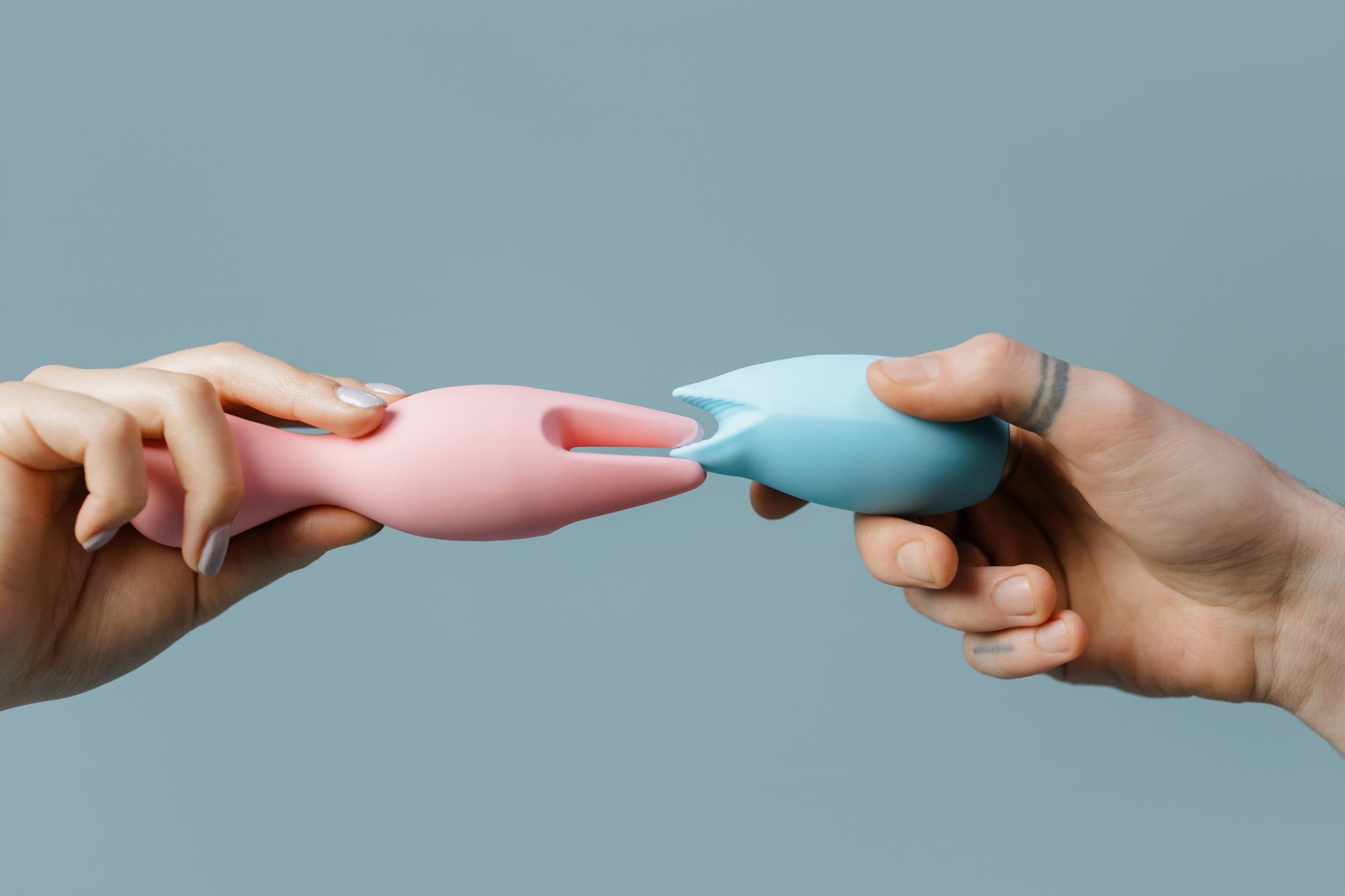
When desire shows up, it's not betrayal
Let's be real. When a relationship ends, your body doesn't file the paperwork. Sometimes it takes weeks before anything feels like pleasure again. Sometimes it takes months. And then one morning, without warning, you notice something shift. A spark. A thought. A wanting that isn't grief wearing a new costume.
That moment often comes with guilt. You might think: "It's too soon." "Does this mean I'm over it?" "If I'm feeling this, was the relationship even real?"
It's none of those things. Desire returning after loss is just your nervous system remembering that pleasure exists separately from the person who's gone.
Why desire works differently after a breakup
When you're in a relationship, pleasure is often tangled up with connection, obligation, or familiarity. Your body has patterns. You know what your partner likes. You know what to expect. The neuro-pathways are worn smooth.
After the relationship ends, those pathways go quiet. For a while, that emptiness feels permanent. But the brain is always recalibrating. Gradually, pleasure starts to feel like a separate thing from partnership. Not better, not worse. Just different.
Here's the surprising part: this can actually make solo pleasure feel more vivid. You're not performing. You're not managing someone else's response. You're not navigating the emotional weight of intimate touch with someone you're still grieving. It's just you and sensation.
Many of my clients describe this as the first time they've actually felt pleasure fully in years.
The grief and desire aren't contradictory
You can miss someone and also want to feel good in your body. Both are true. The temptation is to choose one: either grieve properly (which looks like asceticism) or move on (which looks like not caring). Real recovery doesn't work that way.
Your body knows what it needs. If desire is returning, it's not a sign you didn't love the person. It's a sign you're healing enough to want to feel something other than loss.
That's actually the marker of movement. Not that you've forgotten. Not that you're "over it." But that you're integrating. You're remembering that you're a person who has pleasure independent of anyone else's approval or presence.
Why lemon clitoral vibrators work particularly well right now
Lemon vibrators use suction technology, which means they create sensation without requiring you to do much at all. You position it, you turn it on, and your body does the rest.
That matters after a breakup, because right now, your nervous system might be sensitive to pressure. Not just physical pressure, but the pressure of having to actively do something. Suction-based stimulation is gentler on that. The Lem and other lemon clitoral vibrators work by creating a rhythmic pulse against the clitoris, which feels less like you're making something happen and more like something is happening to you.
That distinction sounds small. It's not. When you're rebuilding a relationship with your own pleasure, that softness matters.
How to start when desire first returns
Don't overthink the first time. Your body knows what to do.
Give yourself 20 minutes of privacy. Put your phone away. No goal other than seeing what your body wants. Start on a lower setting. The Lem has multiple pattern options, and you don't need intensity right now. You need familiarity. You need to remember that your clitoris still works the way it always did.
The point isn't to orgasm. The point is to feel. If an orgasm comes, great. If you get halfway there and stop because it feels weird to want this alone, that's also fine. You're not trying to prove anything.
When shame shows up
It will. You might feel weird using lemon sexual toys when you're still grieving. You might feel like you're being disloyal to the relationship, or like you're moving too fast, or like you should be sadder for longer.
All of that is normal post-breakup noise. The shame usually settles after the second or third time. Your brain catches up with the fact that your body is allowed to feel good even though someone left.
If the shame lingers longer than a few weeks, it might be worth talking to a therapist. Not because there's something wrong with wanting pleasure, but because sometimes the shame is hiding something deeper. Maybe anger at the person for leaving. Maybe doubt about whether you deserved the relationship in the first place. The pleasure is just the surface.
Building a routine that's about you, not replacement
There's a tempting trap here: using lemon adult toys as a way to "prove" you're fine. To move on quickly. To replace the relationship with something you can control.
That's not what this is.
Pleasure after a breakup is about meeting yourself. It's about remembering that your body is still yours. That sensation is still available to you. That you can feel good without needing permission from someone else.
So keep it simple. Maybe you use your Lem twice a week. Maybe it becomes a Saturday morning ritual. Maybe it's just something that happens when the mood shows up. There's no right frequency. The point is that it's yours. Not a replacement for partnership. Not proof that you're healed. Just a thing you do because your body asks for it.
When desire and grief collide mid-pleasure
This happens often enough that I want to name it directly. You'll be using your lemon clitoral vibrator, feeling good, and suddenly you'll think about your ex or the relationship or the breakup. The sensation will shift into something complicated.
You don't have to push through it. You can stop. Take a breath. Feel what's there. Then decide if you want to keep going.
Sometimes the desire and the grief need to be in the same moment. That's not broken. That's just part of how the nervous system moves through loss.
How this connects to wanting your partner when they're unavailable
One of the most common moments people reconnect with pleasure is when they realize they don't need anyone else for it to happen. Whether your partner is unavailable, or the relationship is over, or you're choosing solo time, lemon vibrators let you access your own pleasure independently.
That matters. Not because partnership is bad. But because knowing you can feel good alone actually makes you show up better in partnership when you have one again.
Pleasure as a way forward
Recovery after a relationship loss isn't linear. Some days you'll feel ready to rediscover pleasure. Some days you'll feel like you're betraying the relationship by wanting anything at all. Both of those days are part of the process.
What matters is that you're not forcing it. You're not performing recovery for anyone. You're just noticing when your body starts to ask for something, and you're meeting it with the same gentleness you'd offer a friend who's been through what you have.
Your desire didn't die with the relationship. It just went quiet for a while. When it comes back, that's not something to question. That's something to welcome.
People also ask
Is it normal to want sex soon after a breakup?
Completely. People process loss in totally different ways. Some want to feel numb for a while. Others want to feel intensely alive. There's no timeline for when desire should return. If it's there, it's there. If you're using lemon vibrators or exploring clitoral vibrators solo because you want to feel good, that's a valid part of moving forward.
Should I feel guilty about using a lemon clitoral vibrator when I'm still grieving the relationship?
No. Your body and your heart can hold multiple truths at once. You can miss someone and also want to feel pleasure. Guilt usually comes from the idea that recovery should look a certain way. It shouldn't. Meeting your body's needs is part of healing, not evidence that you didn't care.
How long after a breakup should I wait before using lemon sexual toys again?
There's no mandatory waiting period. Some people need weeks. Some need months. The signal isn't time. It's whether your body is starting to ask for pleasure again. When that desire shows up, that's your body telling you it's ready. The Lem and other lemon clitoral vibrators can help you meet that without pressure.
Can using a lemon vibrator help me move on faster?
No, and that's actually a good thing. If you try to use pleasure as a way to skip over grief, it usually just delays everything. But pleasure as a way to remember that you're still a person with a body that feels good? That's different. That actually helps you integrate the loss instead of running from it.
What if I start feeling pleasure and then it stops?
That's normal. Your nervous system is still recalibrating. Desire might come in waves for a while. You'll feel it, then it'll fade, then it'll come back stronger. That's not failure. That's your body processing in its own timeline.
Should I tell someone I'm using lemon adult toys after the breakup?
No obligation. This is for you. If you want to tell a trusted friend, great. If you want to keep it private, that's also fine. The point is that it's yours. You're not doing it for anyone's approval or knowledge. You're doing it because your body asked for it.