Let's talk about the thing nobody mentions
You're with your partner. Things are good. And then somewhere around 15 minutes in, your clitoris just... stops talking to you. You can see the stimulation happening. You feel the pressure. But the sensation goes flat, almost numb, like someone turned the volume down on your own nerve endings.
This happens. And it's not because your body is broken.
Why clitoral numbness happens during sex
There are three culprits. Usually it's all three working together.
The friction hypothesis. Most partner sex involves sustained direct stimulation to the clitoris. Rubbing the same spot for 10, 15, 20 minutes without a break causes something called sensation adaptation. Your nerve endings literally stop sending new signals because the stimulus hasn't changed. Your body is doing exactly what it's designed to do. It's boring your nerves.
The pressure trap. During penetration or hand-on-skin contact, people often increase pressure as arousal climbs. More pressure actually reduces sensation in some people, especially if the tissue gets irritated. It's counterintuitive, but softening contact often brings feeling back faster than ramping up.
The mental handoff. Here's the part couples never discuss. When you're with a partner, your brain is usually monitoring their experience, their breathing, whether you're "performing" the orgasm they expect. That divided attention literally dampens clitoral nerve response. Your parasympathetic nervous system can't fully activate if part of your brain is watching yourself from outside.
None of these are personal failures. They're just how bodies work under real conditions.
Why lemon vibrators change the game here
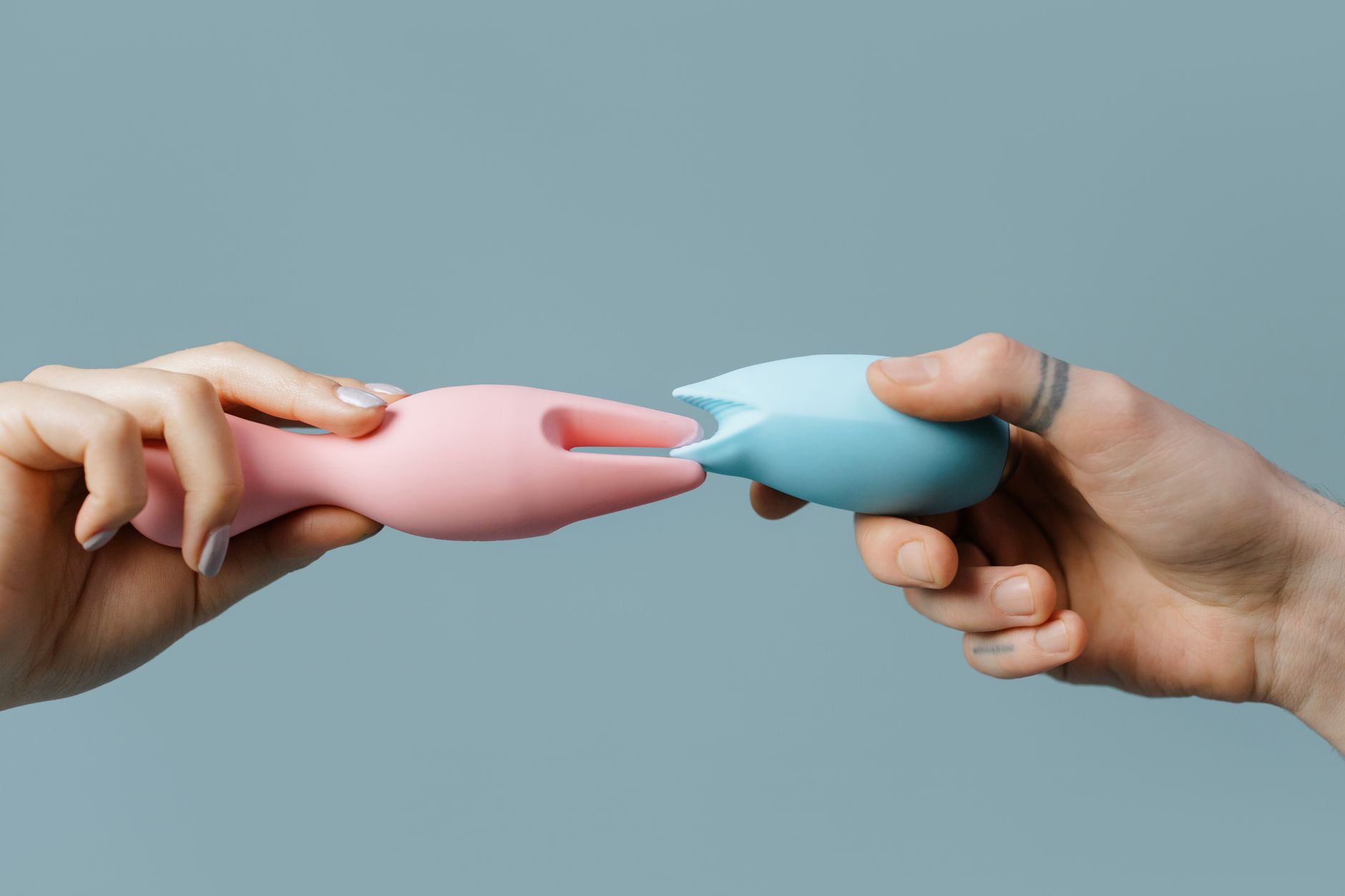
Lemon clitoral vibrators, like the suction-based lemon models from Hella Nancy Lems, bypass all three problems at once.
First, suction moves. Instead of stationary friction, you're getting rhythmic stimulation that naturally cycles on and off. Your nerves stay engaged because the sensation is literally changing 100 times per second. No adaptation. No boredom.
Second, suction creates tissue engorgement without abrasion. It's drawing blood into the area rather than rubbing across the surface. This means you're working with pressure that energizes, not irritates. The lem vibrator approach is gentler and paradoxically more intense because it's working deeper.
Third, using a lemon clitoral vibrator gives your brain permission to stop monitoring. You're not lying there worrying if manual stimulation is "working." The device is working. You can release the performance pressure and actually feel.
Setting up the actual conversation
Here's where most couples crash: introducing a lemon vibrator mid-session without talking about it first.
The conversation isn't "I want to use a toy because you're not doing it right." That's the landmine interpretation, and it kills the mood and the relationship. Instead, try this frame.
"I've noticed that my clitoris sometimes goes a bit numb during sex. It's not about you or what we're doing. It's just my body's way of adapting to sustained friction. I found that using a lemon vibrator actually helps me stay more present and aroused longer. Would you be interested in trying that together?"
Notice what you're doing: separating the device from judgment. It's a tool for you both, not a replacement. Most partners actually feel relieved. They don't have to maintain exact pressure or rhythm anymore.
The practical setup
Timing matters. Introduce the lemon clitoral vibrator about 10 to 12 minutes in, before you hit that numbness wall. Not when sensation is already gone, but when you want to prevent the dropout.
Start at a lower intensity setting. The goal isn't to chase climax fast. It's to keep sensation alive. Settings 1 or 2 on your lem vibrator give you engagement without overwhelming. You can increase later if you want.
Partner involvement: have them use the lemon vibrator on you, or use it on yourself while they focus on other stimulation. Both work. Honestly, many couples find that having a partner hold and control the vibrator deepens connection. It's collaborative, not solitary. They're directly responsible for your pleasure in a different way.
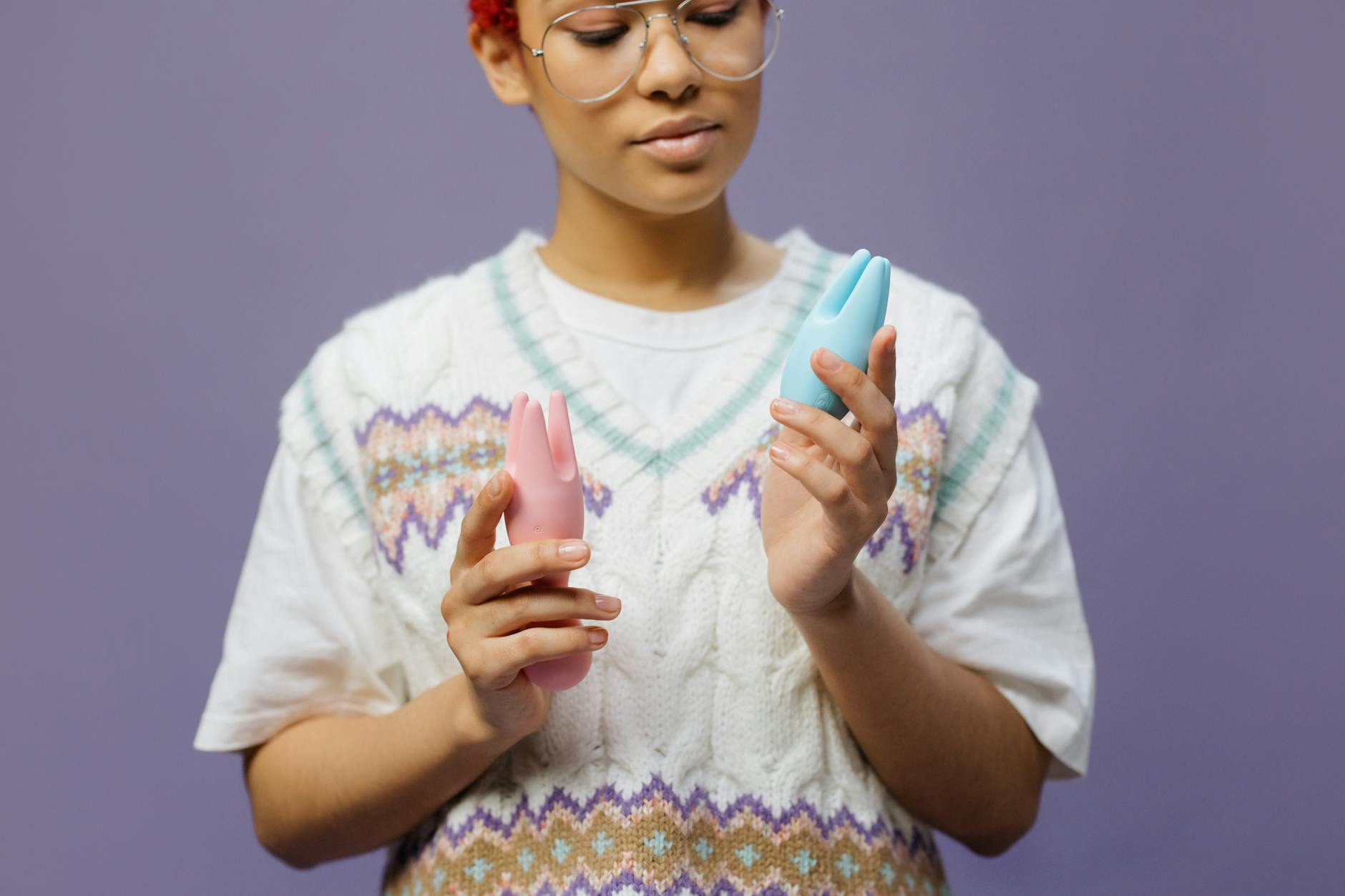
Photo by cottonbro studio on Pexels
Positioning that actually works
If you're trying to use a lemon vibrator during penetration, you need angles that don't create friction between two surfaces.
The easiest setup is side-by-side or you-on-top positions where the vibrator can access your clitoris without being pressed between bodies. If you're lying down during penetration, your partner can hold the lem vibrator against you while they move. It requires a bit of coordination, but it becomes intuitive fast.
Don't feel locked into penetration though. Many couples find that mixing penetration with partnered manual or toy-based clitoral stimulation works better than trying to do both at once. Alternate. Build arousal together. The goal is your sustained sensation, not checking off all the boxes.
The consent and communication part
This is the emotional infrastructure, and it matters more than technique.
Before you use a lemon vibrator during partnered sex, establish what stopping looks like. If sensation drops or pleasure dips, how do you signal that you want to shift things? Do you say it? Squeeze a hand? That's not awkward. That's the difference between a stressful experience and a connected one.
Also: some partners feel insecure about vibrators. That's worth acknowledging directly. "I'm using this because I want to feel more with you, not instead of you" is a real statement. It matters. If your partner remains uncomfortable, that's information too. It might point to a larger intimacy conversation that needs to happen outside the bedroom, possibly with help from someone trained to navigate these dynamics.
When numbness points to something else
If clitoral numbness is new, sudden, or happening all the time, not just during partnered sex, get it checked out. It could be nerve compression, medication side effects, blood flow issues, or something happening in the pelvic floor. A gynecologist or pelvic floor specialist can rule things out in 20 minutes.
But if it's situational, specific to partnered sex, and it started gradually? Friction adaptation and performance pressure. That's where lemon vibrators and communication actually solve the problem.
The real win here
You're not trying to force more sensation. You're trying to stay in the experience longer. A lemon clitoral vibrator does that by removing the adaptation problem and freeing your brain to be present instead of performing. Your partner isn't a failure at manual stimulation. Their hands just can't cycle sensation the way a lem vibrator can.
This is also why understanding how lemon vibrators compare to traditional vibration helps. Different tools do different jobs. For numbness during partnered sex, the suction-based approach wins.
FAQ: Clitoral numbness and partnered lemon vibrator use
How long does it take for clitoral numbness to set in during partnered sex?
For most people, sustained direct friction causes noticeable sensation drop somewhere between 10 and 25 minutes. It varies based on clitoral sensitivity, tissue thickness, arousal level, and how much direct stimulation you're getting. Some people feel the shift faster if they're already slightly numb before sex starts, which happens if you've been in a held state of low arousal or if you're anxious.
Can my partner tell when my clitoris goes numb?
Not always, and that's part of the problem. You might keep responding physically and your partner thinks everything is working fine. Meanwhile you've checked out mentally. This is why communication is crucial. You need to signal it so they know to shift. Otherwise they keep doing the same thing expecting different results.
Is using a lemon vibrator with a partner less intimate than manual stimulation?
No. It's different. Manual stimulation is direct and shows intention. A lemon vibrator removes the performance pressure and lets you both focus on sensation instead of technique. Many couples report feeling more present and connected after they introduce vibrators. Your partner gets to hold it, control it, watch your response. That's intimate.
Should I use the lemon vibrator the whole time during partnered sex?
Not necessarily. Use it strategically. Start with manual or other stimulation. Introduce the lem vibrator when numbness threatens or arousal starts to dip. Then maybe back off and return to manual. Mixing things keeps sensation fresh. It's also less intense on your tissues if you vary the stimulation type.
What if my partner feels threatened by a clitoral vibrator during sex?
That's a conversation, not a problem to solve with more lube or better positioning. Some people associate vibrators with inadequacy. They're not. They're tools that change sensation in ways hands can't. But if your partner's discomfort is real and persistent, exploring why might help more than pushing forward. A lot of that insecurity comes from deeper stuff about masculinity or feeling replaced. That's where talking to someone who specializes in couple dynamics becomes useful.
Can numbness happen even if we use a lemon vibrator?
Yes, if you use it the same way the whole session. Sustained suction can also cause adaptation if there's no variation. Mix up the intensity. Change positions. Take breaks. Move the vibrator slightly. Your body adapts to whatever stimulus you give it long enough. The lemon vibrator just lets you adapt less quickly because the movement is built in.
Is clitoral numbness a sign that I don't love my partner?
No. It's a physiological response to repetitive friction. You can be wildly attracted to someone and still experience sensation adaptation. In fact, being with a partner can sometimes make it worse because you're self-monitoring. Your body isn't judging the relationship. It's just doing nervous system stuff.
What should I do if the lemon vibrator doesn't help?
Try different intensity levels. Try different positions. Try introducing it at different points in the session. Some people need a warmup period where sensation is low-key, then they ramp up. Others need constant novelty. If it truly isn't helping after several tries, talk to a pelvic floor physical therapist or a gynecologist. Numbness that doesn't respond to anything might have a medical component worth checking.
What actually moves the needle
Clitoral numbness during partnered sex stops feeling inevitable once you understand it's not a personal problem. It's a friction and attention problem. A lemon vibrator solves the friction part. Honest conversation solves the attention part.
You're not broken. Your clitoris isn't failing. The sensation is there. You're just asking your nerve endings to report the same stimulus over and over for 20 minutes. Of course they go quiet. That's how biology works. A lem vibrator keeps them engaged. Use that. Communicate about it. Stay present. That's the whole move.