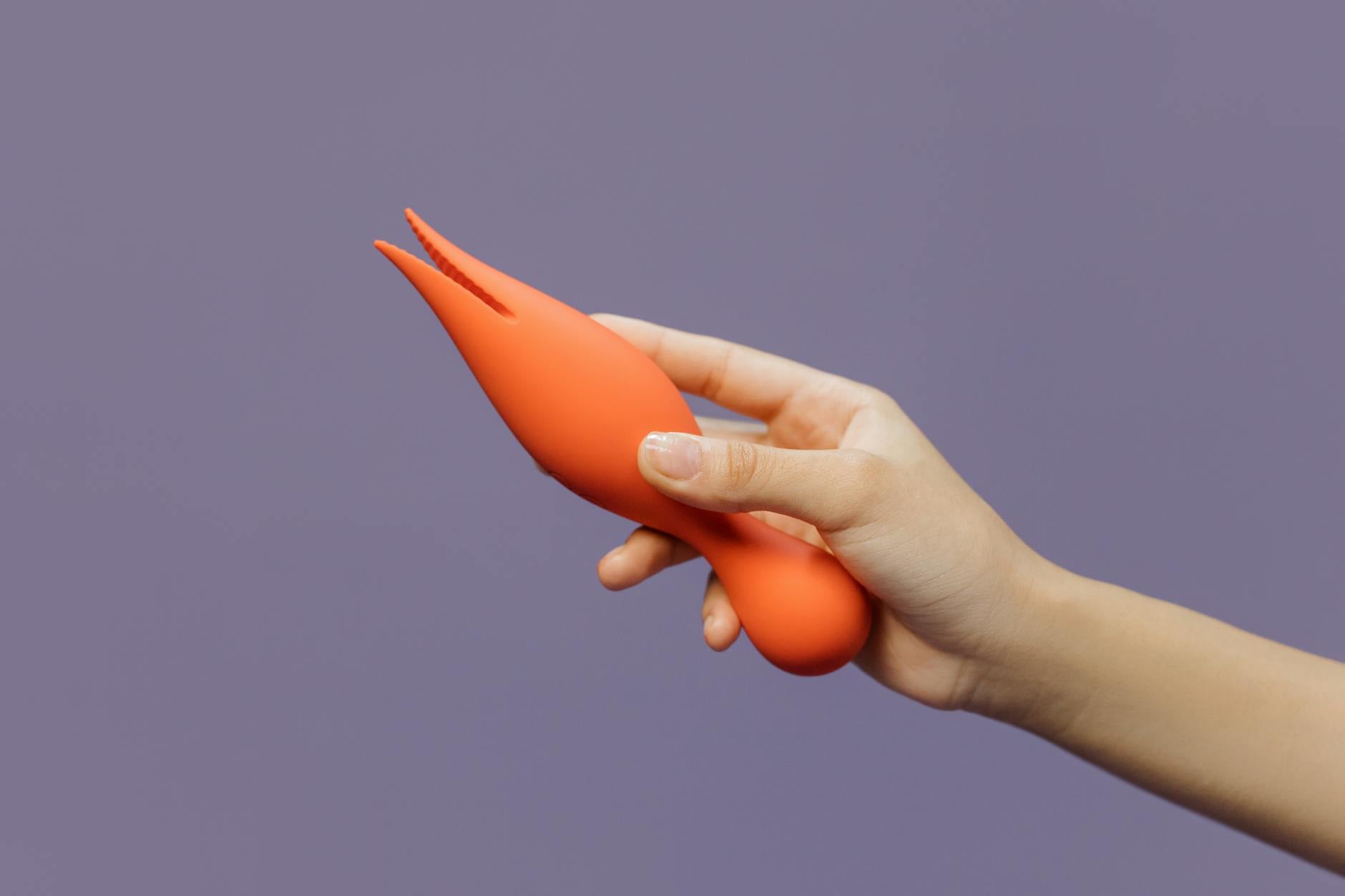
Here's what actually happens to arousal after 40
Your arousal timeline changes. Not because your body is broken, but because the neurological and hormonal shifts of midlife rewire how sensation builds. What used to feel like a switch now feels more like a dimmer dial. Most people interpret this as loss. It's actually an upgrade if you know how to work with it.
The clitoris still responds. Desire still happens. But the pathway there takes longer, which means you have more runway to explore before you arrive. That's the part nobody tells you.
Why slowness changes everything
When arousal was faster, you might have relied on speed to get to intensity. Quicker stimulation, quick buildup, quick payoff. After 40, that doesn't work the same way. Your nervous system needs more time to register sensation. Your blood flow patterns change. Hormonal shifts mean neural pathways need a gentler touch before they light up.
But here's what happens when you lean into slowness instead of fighting it. You start noticing layers of sensation you used to skip over. You discover that a 20-minute warm-up creates depth that a 2-minute sprint never could. You learn that intensity doesn't require speed.
This is where lemon clitoral vibrators, specifically their suction and pulse patterns, become invaluable. They work because they don't demand the quick, sharp friction your tissues used to crave. They build sensation gradually, which is exactly what your system now needs.
The physiology behind slower arousal
Three things shift after 40 that directly affect how fast arousal builds.
Estrogen and blood flow. Estrogen influences how quickly blood reaches your genital tissue. As estrogen drops, that process slows. The tissues need more time to fill with blood, which means more time before sensation peaks. This is reversible with patience, not a permanent loss.
Vagal tone. Your vagus nerve, which regulates arousal and relaxation, becomes more sensitive to stress as you age. If you're carrying tension from work, relationships, or life changes, your nervous system takes longer to downshift into arousal mode. A lemon clitoral vibrator's gentle suction can help your vagus nerve relax into the experience instead of fighting it.
Neurological efficiency. Your brain still processes pleasure signals just as vividly. But it takes slightly longer to recognize them as arousal cues. This is why longer warm-up times feel less like a setback and more like a genuine enhancement. You're not rushing your nervous system. You're letting it fully register what it's receiving.
How to use a lemon clitoral vibrator when arousal is slow
Five principles that work with your body instead of against it.
Start before you think you're ready
Don't wait until you feel aroused to reach for a lemon vibrator. Start stimulation about 10 minutes before you'd normally expect arousal to kick in. This gives your nervous system the lead time it actually needs. You're not forcing anything. You're building a cushion of sensation so that by the time you expect to feel something, you're already several layers deep.
Use lower intensity first
Lemon vibrators typically have 8 to 10 intensity levels. Most people over 40 benefit from starting at pattern 1 or 2 for the first 5 to 7 minutes. The goal isn't to feel a lot immediately. It's to signal to your tissue that stimulation is beginning. Then gradually move up. This slow ramp creates the gradual buildup your system needs instead of shocking it with maximum intensity.
Alternate between suction and pulse
Most lemon clitoral vibrators offer both suction (that gentle squeeze feeling) and vibration patterns. Use suction first for 2 to 3 minutes. This warms tissue without demanding an intense response. Then shift to a pulse pattern. Then back to suction. This variation keeps your nervous system engaged without plateauing. You're orchestrating the experience instead of hitting one note repeatedly.
Extend your foreplay window
When arousal was faster, foreplay might have been 10 minutes. Now budget 20 to 30 minutes before you expect to reach intensity. This isn't extra time because something is wrong. It's the actual time your body needs to build toward depth. A lemon vibrator's efficiency means you're getting more stimulation in that time than manual touch alone provides, which helps you reach meaningful sensation even with a slower arc.
Pair it with deep breathing
Your nervous system can't rush arousal while you're holding your breath or breathing shallowly. As you start stimulation with your lemon clitoral vibrator, focus on slow exhales. Inhale for 4 counts, exhale for 6. This signals safety to your vagus nerve and speeds up the parasympathetic response that arousal requires. It sounds unrelated, but breathing is often the actual bottleneck, not your body's capacity.
When arousal is slow with a partner
This is where the conversation splits from solo play. If you're with a partner and you both want penetration, slower arousal creates a real mismatch if nobody talks about it.
Honestly, the cleanest move is to acknowledge it directly. "My arousal builds slower now, and I actually prefer it. Here's what helps." Then you're not trying to hide a 20-minute warm-up as if it's a problem to solve. You're naming it as a preference that deserves floor time.
Many couples find that one partner using a lemon clitoral vibrator during partnered sex actually deepens the experience for both people. You're building sensation at your pace. They're not waiting. Everyone's nervous system gets what it needs. This is especially useful when you want clitoral focus during penetration, which is common after 40 anyway.
What to expect from a lemon vibrator specifically
Lemon vibrators like the Lem are engineered with suction technology rather than pure vibration. This matters for slower arousal because suction is gentler on tissue but builds sensation deliberately. You're not feeling a buzz. You're feeling a squeeze and release pattern that mimics oral stimulation. For slower nervous systems, this is often more effective than traditional vibration, which can feel too intense or too numb depending on your sensitivity.
The Lem's patterns start soft and give you real control over your pacing. That's the opposite of toys that max out immediately. You get to decide when intensity climbs, which is crucial when you're building arousal slowly.
The deeper benefit nobody mentions
When you stop fighting slowness and actually lean into it, something shifts. You start noticing that slower arousal often leads to longer, more full-body orgasms than the quick ones you used to have. Your pelvic floor releases more completely. Your nervous system has time to coordinate the whole experience instead of just the clitoris rushing ahead.
This is why so many people over 40 report that they've had the most intense orgasms of their lives. Not because their bodies got better. Because they stopped measuring their pleasure against a 25-year-old's timeline and started measuring it against what actually feels good now.
People also ask
How long should I warm up before using a lemon vibrator?
Start with 5 to 10 minutes of external touch or light stimulation before introducing a vibrator. If you're going solo, this might be hand touch. If you're with a partner, this could be their fingers or kissing. Then use your lemon clitoral vibrator starting at lower intensities. Total foreplay time from zero arousal to meaningful intensity usually sits around 20 to 30 minutes now, which is genuinely different from earlier in life. That's not a problem. That's the actual timeline your body needs.
Does slower arousal mean less intense orgasms?
No. Actually the opposite. Slower arousal often produces deeper, longer-lasting orgasms because your nervous system has time to fully engage. You're not rushing to the finish. You're building layers. When you finally climax after a longer buildup, the release is often more complete. If you're used to quick, surface-level orgasms, slower arousal can feel like discovering a whole new capacity.
Should I use a lemon vibrator every time or just sometimes?
Use one whenever it helps. There's no schedule requirement. Some people use lemon clitoral vibrators several times a week. Others weekly. The benefit isn't about frequency. It's about using the right tool when you want it. If slower arousal is your pattern now and a lemon vibrator helps you build sensation efficiently, use it then. If you're having a day where arousal feels faster, you might not need it. Listen to what your body asks for.
Can using a lemon vibrator regularly change how my arousal responds?
Yes, but not in the way you might fear. Regular use of a lemon clitoral vibrator can actually help your nervous system become more efficient at recognizing and building sensation. You're essentially training your brain to register the signals your body is sending. Over time, you may notice that arousal starts a tiny bit sooner or builds slightly faster. But the deeper benefit is that you become more comfortable with your own timeline and stop comparing yourself to who you used to be.
Is there a difference between lemon vibrators and other clitoral vibrators for slow arousal?
Yes. Lemon vibrators use suction technology instead of pure vibration, which makes them gentler but more stimulating for many people. Traditional vibrators buzz. Lemon clitoral vibrators squeeze and pulse. For people experiencing slower arousal, that difference matters. Suction feels more like touch. It's easier to build sensation with because it's not one intense frequency. You get variety in the pattern itself. That variation is exactly what slower nervous systems benefit from.
What if I still can't reach arousal even with longer warm-up time?
That's worth exploring with a healthcare provider, especially if arousal used to happen for you and now it doesn't. Sometimes it's hormonal (low estrogen, low testosterone, thyroid issues). Sometimes it's medication side effects. Sometimes it's stress or relationship strain wearing on your nervous system. A lemon vibrator is a tool that helps, but if arousal has genuinely vanished, that's a conversation for a therapist or a menopause specialist. There are solutions, but they might extend beyond what a toy alone can do.
The shift worth making
Arousal after 40 isn't broken. It's different. And if you actually work with that difference instead of against it, you'll probably discover that your capacity for pleasure is deeper than it ever was. You're not chasing the orgasm your younger self had. You're discovering the one your current nervous system can actually build. A lemon clitoral vibrator helps you get there. But the real work is giving yourself permission to take the time you need.
If you're navigating this shift in a relationship and want support, reach out to discuss what you're experiencing. Slow arousal often points to something worth exploring together.
References
National Institute on Aging. (2022). Sexual Health and Aging. Retrieved from https://www.nia.nih.gov
American College of Obstetricians and Gynecologists. (2021). Changes in the Aging Vulva and Vagina. Obstetrics & Gynecology, 137(5), 754-756.
Kommission, H., & Rosen, R. (2020). Sexual Function in Midlife and Older Women: A Narrative Review. Menopause, 27(10), 1148-1160.
Stewart, K. (2019). Sexual Response and Aging: The Role of Psychological and Physiological Factors. Journal of Sex & Marital Therapy, 45(3), 223-240.