
Let's be honest about what happens
Antidepressants work by changing how your brain processes serotonin. That's the entire point. But serotonin isn't just a mood chemical. It's also deeply involved in arousal, desire, and the physical cascade that leads to orgasm. When SSRIs (selective serotonin reuptake inhibitors) flood your system, they stabilize mood by design and flatten sexual response as collateral damage.
This is one of the most common and least discussed side effects of antidepressant therapy. Studies suggest between 25 and 60 percent of people taking SSRIs experience some form of sexual dysfunction. That's not a quirk. That's structural.
Why sensation flattens (and why it's not all in your head)
Three mechanisms are at play. First, SSRIs reduce genital blood flow, which means less engorgement and slower arousal. Second, they lower dopamine signaling in the pleasure centers of your brain, so even when your body does respond, it feels muted. Third, they can delay or prevent orgasm entirely by suppressing the neuromuscular contractions that build toward climax.
The cruel part: your brain still knows intellectually that you want pleasure. Your body just won't cooperate. That disconnect is disorienting.
Here's what matters. This is not permanent damage. It's not psychological. And it's not a sign that you need to choose between mental health and sexual health. You don't.
The role of lemon clitoral vibrators in recovery
This is where air-suction stimulation like the lemon vibrator changes the game. Traditional vibrators rely on repetitive mechanical friction to build sensation. When your nervous system is dampened by antidepressants, that friction often feels like nothing. You increase the intensity, it still feels like nothing, and eventually you give up.
Lemon sucker technology works differently. Instead of vibration, it uses gentle air-pulse suction that stimulates the clitoris and surrounding nerve tissue without requiring friction. The effect is cumulative rather than immediate. You're not looking for instant intensity. You're building sensation slowly over time.
I often recommend this approach to clients working through SSRI-related dysfunction because it bypasses the deadened response pathways and engages the nervous system in a way that feels novel and achievable.
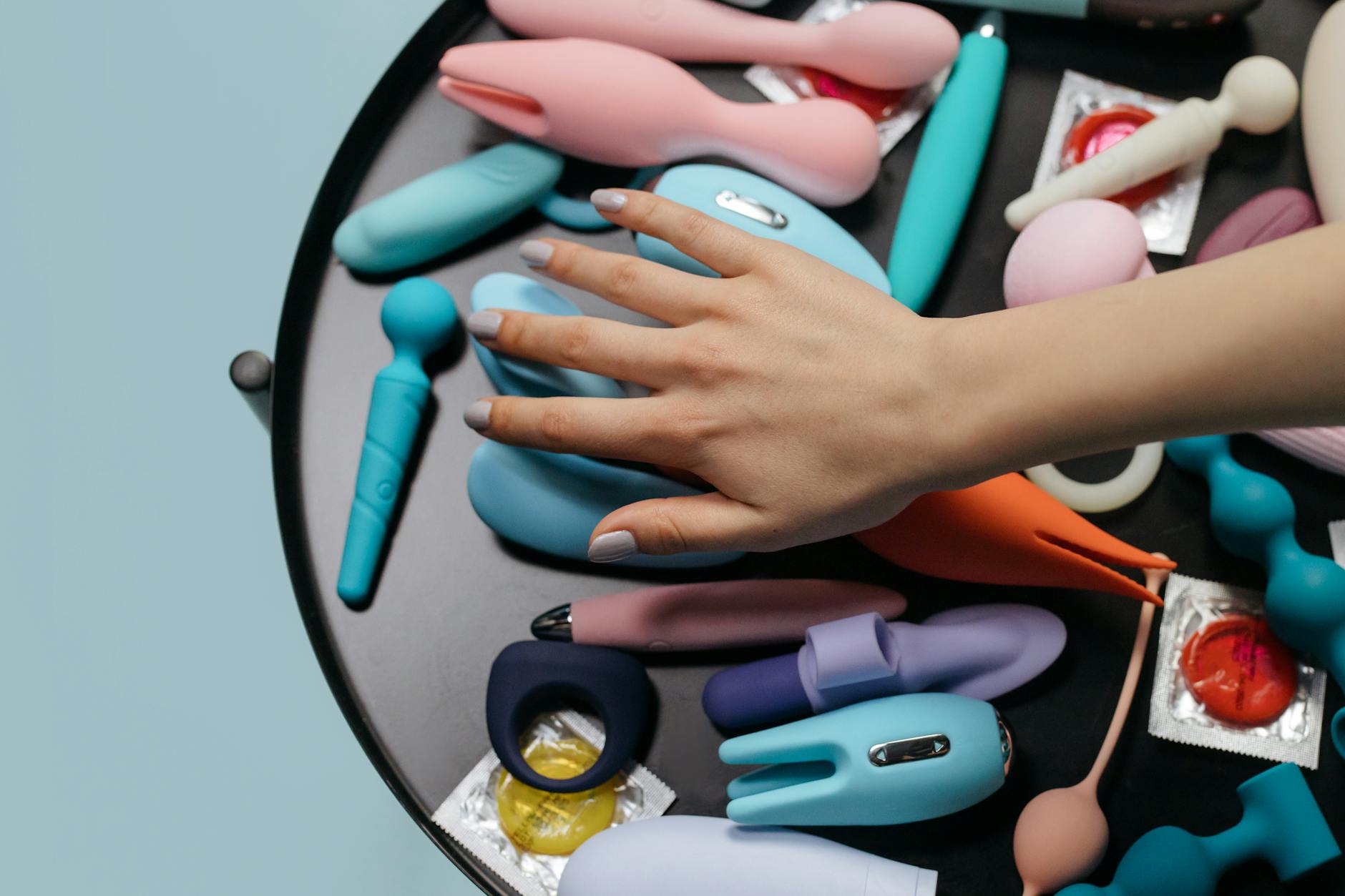
Photo by cottonbro studio on Pexels
Practical steps to rebuild sensation
Start with the lowest setting. Don't power through to find sensation at intensity 5 or 6. Begin at pattern 1. Spend 10 minutes there, multiple times a week. Your nervous system needs to relearn what pleasure feels like. That takes time.
Build a warm-up ritual. Antidepressants slow arousal. Budget 20 to 30 minutes for warm-up before you introduce the lemon vibrator. Read erotica, listen to audio, touch your own body without expectation of orgasm. Prime your system.
Use the lemon vibrator as a middle step, not a finale. Start with manual touch for 10 minutes. Move to the vibrator at low intensity for another 10. Notice whether sensation is building or plateauing. If you hit a ceiling, pause and rest. Come back the next day. This isn't about forcing an outcome.
Track what actually works. Depression and medication fog make it hard to remember what felt good last week. Keep a simple note: date, time, which lemon vibrator pattern, how long it took to feel something, whether you climaxed. Over two or three weeks, patterns emerge.
When to talk to your prescriber
If you're six months into your current antidepressant dose and sexual dysfunction is severe, don't suffer in silence. There are options. Your psychiatrist or GP can explore switching to a medication with fewer sexual side effects (bupropion, for example, has a much lower incidence of sexual dysfunction). Or they might add a low-dose medication that counters the sexual side effect. Or adjust timing (taking your dose after sex instead of before).
These conversations feel awkward. They're worth having. Your mental health and your sexual health are both non-negotiable.
The emotional piece no one warns you about
The physiological flatness is one problem. The psychological toll is another. Many of my clients describe feeling disconnected from their own bodies, grieving the sexual partner they used to be, or feeling like a burden to their partner. That grief is valid. It's also treatable.
If you're in a partnership, this is a conversation to have together. Not "my body is broken," but "my brain chemistry has changed how I respond right now, and here's what helps." That framing shifts it from shame to logistics.
If you're single, there's no performance pressure. You're exploring your own body at your own pace. That's actually an advantage.
Patience is the missing instruction
Recovering sensation after antidepressant-induced dysfunction takes weeks, sometimes months. That timeline is frustrating when you're desperate to feel normal again. But it's also realistic. Your nervous system didn't flatten overnight. It won't rewire overnight either.
Most of my clients report that sensation begins returning around the four to eight week mark when they're consistent with exploration and low-pressure stimulation. Some take longer. Some find that switching medications accelerates the process. The point is movement, not speed.
You didn't choose depression. You didn't choose the medication side effects. But you can choose how to respond. A lemon vibrator, patience, and the willingness to explore your body without judgment are a solid starting point.
People also ask
How long does it take for antidepressant sexual dysfunction to resolve on its own?
Many people wait, hoping the side effect will fade. Some do improve after three to six months as the body adjusts. Others see no improvement without intervention. Waiting passively is a choice, but it's not the only one. Working with your prescriber on timing adjustments, dose changes, or medication switches often produces faster results than patience alone.
Can you use lemon vibrators while taking antidepressants?
Absolutely. Lemon clitoral vibrators are safe to use regardless of your medication. In fact, they're particularly effective for antidepressant-related dysfunction because air-suction stimulation can bypass the dulled neural pathways. Start at the lowest intensity and increase gradually as sensation returns.
Does adding bupropion to an SSRI really help sexual function?
Bupropion works on dopamine and norepinephrine rather than serotonin, which means it has a different mechanism. Adding it to an SSRI can counteract sexual side effects in some people. Others see no benefit. It's worth discussing with your psychiatrist, but it's not a guaranteed fix. The lemon vibrator approach works regardless of which medications you're taking.
Is the sensation loss from antidepressants different from natural arousal changes?
Yes. Natural arousal changes like those during perimenopause or after hormonal shifts involve tissue changes and blood flow variation. Antidepressant-induced dysfunction is primarily neurological. Your tissues and blood vessels are usually fine. Your brain chemistry is muted. That distinction matters because it means the recovery pathway is different. A lemon vibrator helps because it directly stimulates nerve tissue without relying on the dampened arousal cascade.
Should you tell your partner about sexual dysfunction from antidepressants?
If you're in a partnered relationship and sex is part of that connection, yes. Not as confession, but as information. "My medication is affecting how I'm responding physically" is a fact, not a failure. It opens the conversation to collaborative problem-solving rather than silent shame. Most partners are relieved to understand what's happening.
What if your desire is gone completely, not just the physical response?
Desire and arousal are different. Some antidepressants suppress desire (wanting sex) while others suppress arousal (the physical response). If both are gone, talk to your psychiatrist. Low desire can sometimes be addressed by timing your dose differently or switching medications. But it can also be a symptom of depression itself, not the medication. That's why the conversation with your prescriber matters.