Let's start with the honest part
Depression doesn't just kill your mood. It kills the physical sensation of desire. Your brain stops sending the signals that normally light up your body. Touch feels muted. Arousal feels impossible. You start to wonder if you'll ever feel that spark again.
Here's what's actually happening, and what comes next.
Why depression flattens desire in the first place
Depression changes everything about how your nervous system works. Serotonin drops. Dopamine bottoms out. These chemicals don't just affect your mood. They're the same chemicals that drive arousal, that make touch feel good, that let your body build toward pleasure.
When those systems are offline, even a partner you love, even touch that would normally feel amazing, registers as basically nothing. You're not broken. Your body isn't the problem. Your brain is in a protective mode that shuts down non-essential sensations, and pleasure registers as non-essential to a depressed brain.
The tricky part: when medication or therapy starts working and your mood lifts, desire doesn't always come flooding back the same way it left.
The uneven return of sensation
Most people expect that once depression loosens its grip, everything resets. That's not how it works. What usually happens is more like a slow fade-in. Some days you feel a flicker of something. Other days you're back to flatness. Your sensitivity might return to your breasts first, or your thighs, while your clitoris stays numb for longer.
This isn't linear. Your body is slowly relearning how to respond. It's like waking up from anesthesia. The feeling comes back in patches.
This is where most people get scared. You start to think, "Maybe the depression killed this permanently. Maybe I'm never going to want sex again." That fear is real and understandable. But clinically, that's not what's happening. Your system is rebooting. It just takes time.
Why lemon clitoral vibrators help during this phase
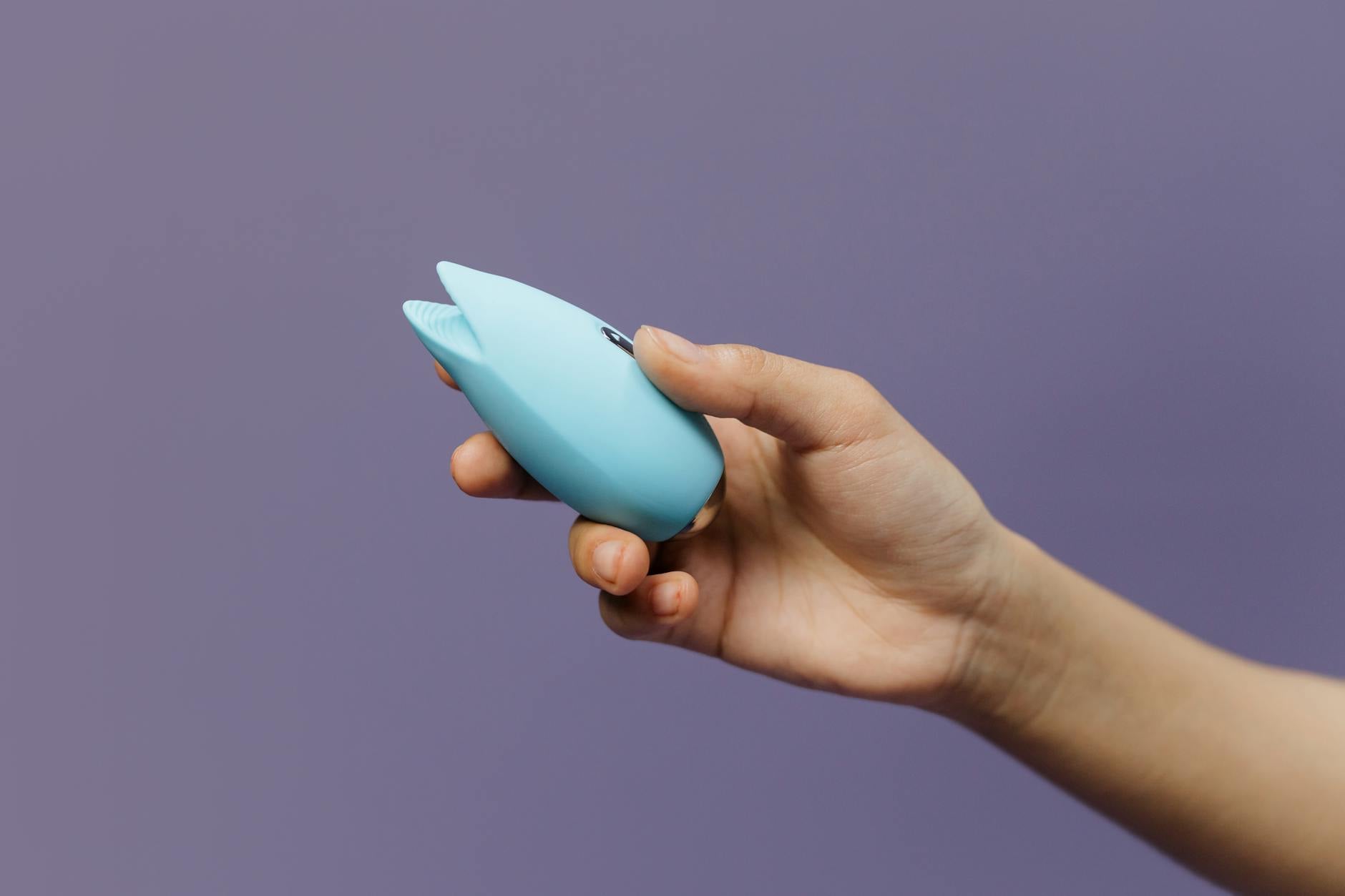
A good lemon vibrator, like the Lem, works differently than traditional vibration. Instead of relying on pure tremor, suction-based devices create a gentler, more diffuse sensation that can feel easier to perceive when your sensory thresholds are still recovering.
Here's why that matters: when depression has flattened your response, you need stimulation that doesn't require you to already be aroused to feel something. Suction draws sensation inward rather than pushing it outward. For a nervous system that's still waking up, that can feel less demanding, less like you have to perform arousal you don't yet feel.
Direct clitoral vibration sometimes feels too intense when you're still healing. Suction is different. It's more forgiving. It lets sensation build without requiring that you show up already halfway there.
How to use a lemon vibrator when desire is returning slowly
Three principles matter here:
Start with no goal other than sensation. Not orgasm. Not arousal. Just. Feeling. Put the lemon vibrator on the lowest setting and spend five minutes noticing what you actually perceive. Is it warm? Cool? Does it create pressure? Does it feel good, neutral, or meh? All of those are useful data. You're teaching your body to talk to your brain again.
Use it outside of "sexy" contexts. This sounds weird but it works. Use the Lem while you're reading, or in the bath, or while your partner is in the other room. Remove the pressure that this has to lead somewhere. You're not building toward sex. You're just reconnecting with sensation as a standalone thing.
Adjust the setting based on what you feel, not what you think you should feel. If pattern two on the lemon vibrator feels good and pattern six feels like nothing, stick with pattern two. Your nervous system is still calibrating. You're not broken because a higher setting doesn't feel better. You're healing at the right pace for you.
The role of your partner in this, if you have one
If you're partnered, you need a conversation that's separate from the sex conversation. "I'm healing from depression and my body is waking up slowly" is different from "I don't want you anymore." Confusing those two things is how resentment sneaks in.
Your partner can help by being patient without being passive. That means they don't wait for you to initiate everything. They also don't pressure you into sex before you're ready. They ask what would feel good right now, and they listen when you say, "I want to use the lemon vibrator and have you nearby but not touching me."
That's a real request. That's a way of staying connected while you heal.
When to check in with a professional
If you're six months past your depression lifting and desire still hasn't returned, or if you feel like sensation is getting worse instead of better, that's worth mentioning to your doctor or therapist. Sometimes a medication adjustment helps. Sometimes you need specific talk therapy around sexuality and trauma. Sometimes there's nothing wrong, and you just need more time.
But there's also a difference between "slowly returning" and "completely absent." If you're feeling any flicker, any spark, any moment where something feels good, your nervous system is healing. Lemon vibrators and lemon clitoral suction devices are designed to work with that healing, not against it.
The bigger picture
Desire returning after depression is not about willpower or trying harder. It's about patience. It's about using the right tools to help your nervous system remember what pleasure feels like. A lemon vibrator isn't magic, but it's specifically designed for the kind of gentle, responsive stimulation that healing bodies need.
Your sexuality didn't disappear. It's waiting for you to be ready. And when you are, the right tools, and the right permission to take your time, make all the difference.
People also ask
How long does it usually take for sexual desire to return after depression treatment?
There's no standard timeline. For some people, desire starts creeping back within weeks of starting antidepressants. For others, it takes months. Your age, your medication, your relationship status, how long you were depressed, and how much support you have all matter. The key is that if you're feeling any small shift at all, your nervous system is moving in the right direction. That might feel slow, but it's real progress.
Is it normal to feel desire but not be able to physically respond, even after depression lifts?
Completely normal. Your brain can start firing arousal signals before your body fully wakes up. You might think about sex and feel mentally interested, but your body stays flat. This is often a medication side effect (some antidepressants can dampen physical response even once mood improves) or just the lag between emotional healing and nervous system recalibration. If it persists, it's worth talking to your doctor about dosage or timing changes.
Can lemon vibrators actually help with sensation recovery, or is that just marketing?
Lemon suction vibrators work differently than traditional vibration. Suction creates a gentler, more enveloping sensation that doesn't require you to already be aroused to feel something. That said, they're not a treatment for depression or low desire. They're a tool that works with your healing nervous system. They don't speed up the process, but they can make the process feel less frustrating and more exploratory.
What if I'm using the lemon vibrator and it still feels like nothing?
That's information, not failure. It means either your nervous system needs more time, the setting isn't right for where you are right now, or you need a different type of stimulation. Try a lower setting. Try using it in a different context. Or take a break and try again in a week. The worst thing you can do is force sensation to happen. Pressure makes healing slower, not faster.
Should I be using a lemon vibrator alone or with my partner when desire is returning?
Both are valid, and they serve different purposes. Alone, you get to explore without any expectation or performance pressure. That's often the best place to start. With a partner nearby (but not necessarily touching), you stay connected without being pushed. Many people alternate between solo and partnered exploration as they heal. Do what feels safest right now.
What if my antidepressant is the reason my desire is still low, even though my mood is better?
This is real and common. Some antidepressants, especially SSRIs, can dampen sexual response even once mood improves. Talk to your prescriber about this. You might adjust timing (taking the medication at a different time of day), switch to a different class of antidepressant, or add another medication to counteract the sexual side effect. This is treatable. You don't have to choose between mental health and sexual pleasure.
What happens next
Healing from depression isn't linear, and reconnecting with pleasure isn't either. The lemon vibrators and lemon clitoral suction devices from Hella Nancy Lems are built for this exact moment: when your body is waking up and you need tools that listen to where you actually are, not where you think you should be.
Your desire didn't leave permanently. It's coming back. And you deserve support while it does.
If you have questions about how to navigate this phase, or if you're not sure what might help your specific situation, reach out. You can always contact us to talk through what might work for you.