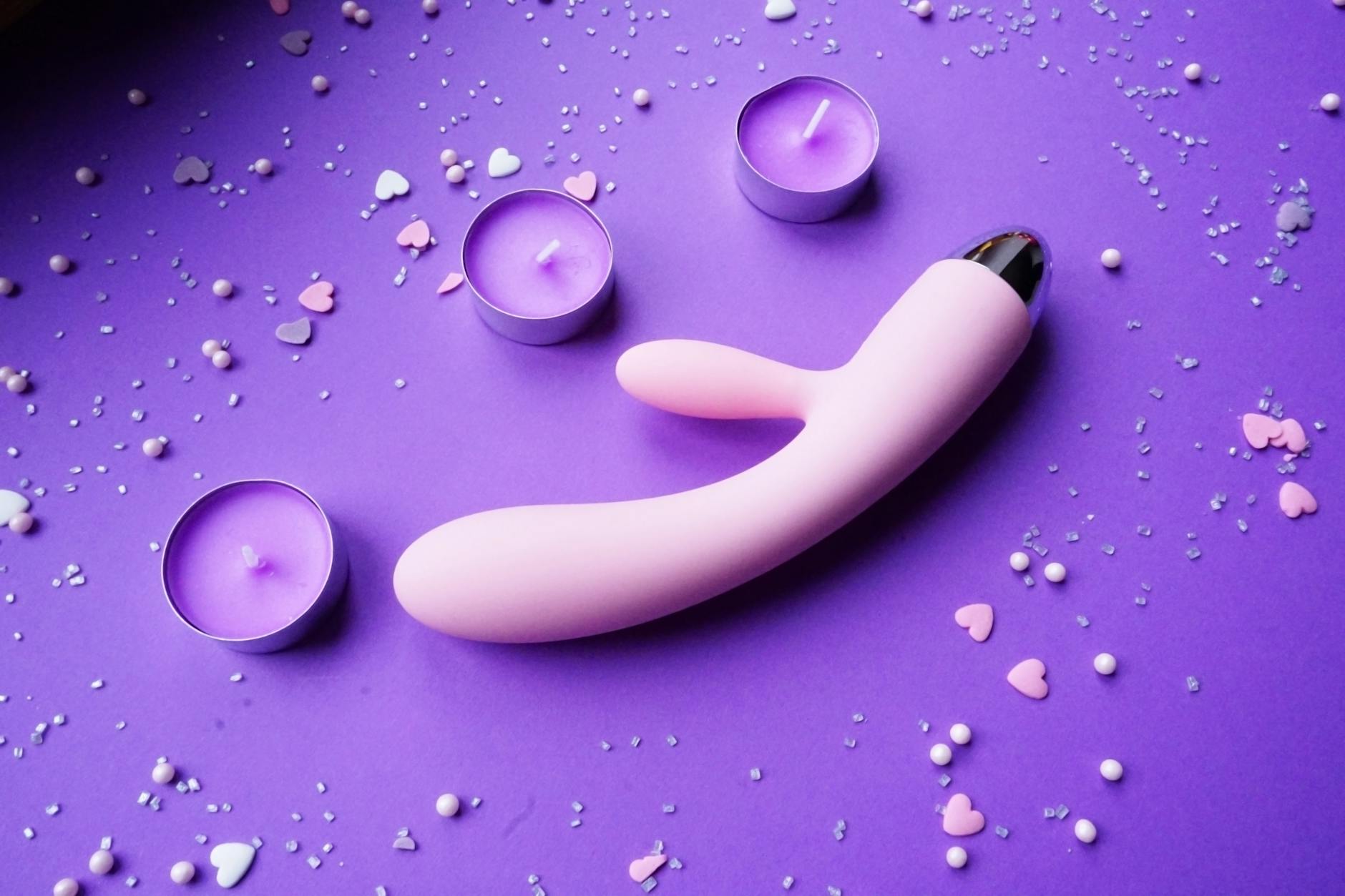
Here's what nobody tells you about vibrator intensity
You buy a lemon vibrator, open it, and the first thing you do is crank it to the highest setting. Makes sense, right? More power equals better orgasms. Except it doesn't. Not even close.
I've talked to hundreds of people about what actually creates satisfying orgasms, and intensity is maybe the fifth thing that matters. The real factors are pattern, sustained pressure, the state of your nervous system, and whether you can actually relax enough to feel anything. A maxed-out lemon sexual toy that sends your nervous system into overdrive is less useful than a lower setting that you can sink into completely.
Why high intensity feels like the goal (but isn't)
When you first use a clitoral vibrator, the sensation is novel. Your body is noticing something new, and intense stimulation gets your attention fastest. Your nervous system lights up. Your brain thinks "this is doing something," which feels like progress.
The issue is novelty wears off in about three minutes. Then you're left with intensity as your only tool, and intensity alone doesn't build toward orgasm. It just numbs.
Think of it like music volume. A song at full volume doesn't feel better; it feels painful. The sweet spot is when you can actually hear the nuance. Same with a lemon clitoral vibrator. You want intensity high enough to register, not so high that you're gritting your teeth.
What intensity actually does physiologically
When you increase vibrator intensity, you're increasing frequency (vibrations per second) and sometimes amplitude (the distance the motor travels). Here's what that means for your body.
Low intensity (patterns 1-3 on most lemon vibrators) activates surface nerve endings. Your clitoris has thousands of them. This setting is where you feel texture, pattern changes, and nuance. It's exploratory.
Mid-range intensity (patterns 4-6) engages deeper nerve clusters and begins to build a steady chain reaction. Your breathing changes, your pelvic floor engages involuntarily, and arousal stacks on itself.
High intensity (patterns 7-10) floods the area with input all at once. This can fast-track you to climax if your nervous system is ready for it. But if you're tense, distracted, or just starting your session, high intensity creates static noise instead of signal.
The orgasm quality question is really about control
Here's what I see clinically: people who have the most satisfying orgasms aren't maximizing intensity. They're maximizing control.
Control means you can start low, feel what's happening, adjust the pattern, hold pressure steady for as long as you need, and then escalate exactly when your body wants it. With a lemon vibrator offering 10 patterns and variable intensity, you have granular control. Someone using it at full blast on one pattern has zero control. They're just hoping today is the day their body cooperates with that one setting.
Orgasm quality improves dramatically when you're not chasing a specific sensation. You're just following what feels good in real time. That requires the ability to dial intensity up and down without thinking about it.
The pattern matters more than the power
If you had to optimize one thing about your lemon vibrator experience, skip intensity and focus on pattern.
Intensity is like the volume knob. Pattern is like the song itself. You can have the volume perfect, but if the pattern doesn't match your neurology that day, nothing happens. Some people's clitorises respond best to steady vibration. Others need pulsing or waves or rhythm changes to build arousal.
I'd recommend this: spend a full session on pattern 1 or 2, medium intensity, without trying to orgasm. Just feel what the pattern does. Where do you feel it? Does it build sensation or does it plateau? Does your body want faster or slower? Does the pattern need to change to keep your attention?
That self-knowledge is worth more than any intensity setting.
When to actually use high intensity
High intensity has a place. It's just not where most people think.
Use it at the very end of a session when you're already deeply aroused and you want to tip over into orgasm fast. Use it for novelty testing when you're curious whether your nervous system today responds to intensity (it changes month to month). Use it when you're frustrated and need to shock your system into paying attention.
Don't use it as your baseline. Your baseline should be the lowest setting where you can still feel clear sensation. That's usually pattern 2-4 for most people with a lemon vibrator.
The desensitization trap
This is the part that matters for long-term pleasure. If you spend months using your lemon clitoral vibrator at maximum intensity, your nervous system adapts. That's called desensitization. You're telling your body "only extreme input counts as pleasure." Then regular intensity feels dull. Then you crank it higher. Then you're stuck.
I've worked with people who couldn't feel anything under pattern 8. They'd unknowingly trained their bodies that way. It took weeks of resetting back down to medium intensity to restore normal sensation.
Start at medium. Work lower when you can. Only go higher when you genuinely want faster escalation that day. Your future pleasure depends on it.
How to find your personal intensity sweet spot
Your sweet spot isn't fixed. It changes with stress levels, sleep, cycle phase, what you've been thinking about all day, and what happened in your relationship recently.
On a low-stress day with clear head space, you might orgasm easily on pattern 3 at medium intensity. On a high-stress day, you might need pattern 6. That's not a failure. That's data. You're learning.
Start every session by asking yourself three questions: How present do I feel today? How much mental noise am I carrying? How much time do I have? Then pick an intensity range that matches. Give yourself permission to adjust mid-session. That's the whole point of having options.
FAQ: Lemon vibrator intensity and orgasm
Why does my lemon vibrator feel less intense than it used to?
Two reasons usually. First, physical adaptation. If you've been using the same pattern and intensity for months, your nervous system has acclimated. Second, emotional resistance. Stress, relationship tension, or distraction dampens sensation. Before you assume you need a stronger toy, spend a week using lower intensity settings and a different pattern. Novelty often restores sensitivity faster than power.
Can I damage my clitoris by using a vibrator at high intensity?
Not from the vibrator itself. Your clitoris is resilient and designed for sensation. What you can do is create prolonged numbness if you overstimulate constantly. Think of it like sun exposure. One day at high intensity won't damage anything. Six months of daily high intensity can create temporary desensitization. The solution is the same: take breaks, vary your intensity, and let your nerve endings reset.
Is a more expensive lemon vibrator going to have better intensity?
Not necessarily. Price reflects motor quality and design durability, not intensity range. A $65 lemon clitoral vibrator can deliver just as much power as an $89 model. The difference is usually in how smoothly it transitions between intensities and how long it lasts. If your current vibrator has the range you need, price won't improve your orgasms.
What's the difference between intensity and pattern?
Intensity is how strong the vibration is (measured in frequency, usually expressed as Hz or vibrations per second). Pattern is the rhythm of that vibration. A steady hum at high intensity is different from pulsing at high intensity. Most people find that switching patterns mid-session feels better than just cranking intensity up once you're already aroused.
Should I use high intensity if I have sensitivity issues?
Actually, yes, but counterintuitively. If standard intensity feels too intense on your clitoris, high intensity on a lower pattern number (which spreads vibration differently) can sometimes feel better than medium intensity on a concentrated pattern. This is why pattern exploration matters more than intensity selection when you have sensitivity concerns. Start at pattern 1, medium intensity, and experiment upward from there.
Why do I feel less from my lemon vibrator after being with a partner?
Physical and psychological. After partner sex, your tissues are more sensitive and slightly fatigued. Psychologically, you might be in a different headspace. Solo pleasure is a completely different experience from partnered pleasure. Rather than chasing the same intensity you felt solo, accept that partnered timing creates different sensations. Solo sessions benefit from lower intensity exploration. That's not less pleasure, it's different pleasure.
The bottom line
Intensity matters. But control matters infinitely more. A lemon vibrator that gives you seven intensity levels and ten patterns teaches you something new every time you use it. A toy you're white-knuckling at maximum speed teaches you nothing except that your nervous system can be overwhelmed.
Start with what feels good, not what feels intense. Let your body tell you when to escalate. Your orgasms will be deeper, more repeatable, and actually more intense because your nervous system is paying attention instead of protecting itself from overstimulation.
If you're curious about exploring new patterns or a different kind of stimulation entirely, we've written guides on how to choose the right lemon vibrator for your body and sensitivity and why lemon vibrators work better for clitoral sensitivity. Both dig into the neuroscience behind why different tools feel different.
Your pleasure is worth being intentional about. That starts with understanding what intensity actually does.